
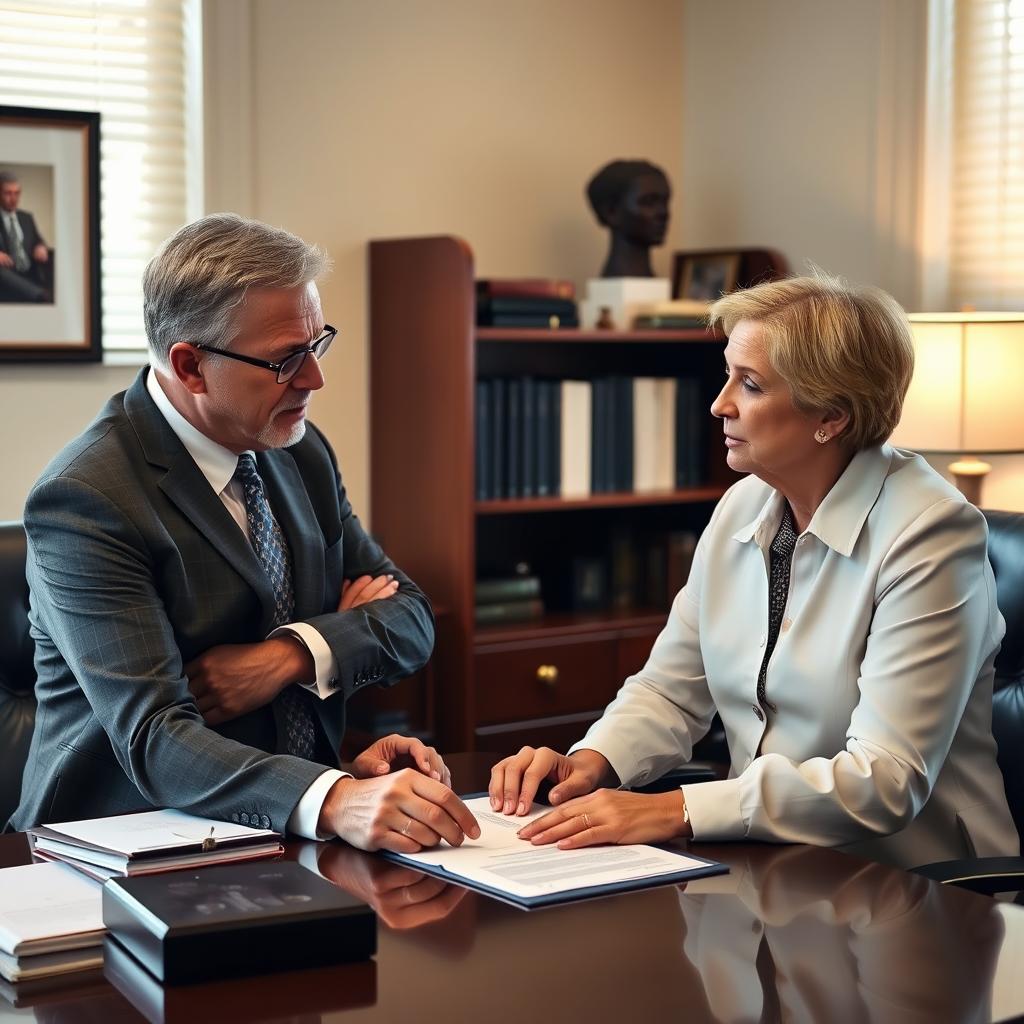
Business Valuation Divorce Lawyer Prince George County, VA
You spent years building a business in Prince George County, and now divorce raises urgent questions about its worth and who keeps what. In Virginia, marital property—including your business interests—is divided under the equitable distribution statute, Va. Code § 20‑107.3. An accurate value can make the difference between a fair settlement and a financial loss that follows you for years. Law Offices Of SRIS, P.C. Concentrates on complex property division, including business valuation, helping clients throughout Prince George County protect their economic future. For a consultation, reach our firm at (888) 437‑7747.
How Business Valuation Works in a Prince George County Divorce
Virginia is an equitable distribution state, not a community property state. That means marital assets are divided fairly—but not necessarily 50/50—based on a set of statutory factors. When a family-owned business, professional practice, partnership interest, or closely held corporation is part of the marital estate, its valuation becomes a central issue. The Prince George County Circuit Court has exclusive original jurisdiction over divorce and equitable distribution; it is the court that will examine the evidence and decide how business property is classified, valued, and allocated.
Business valuation in a Prince George County divorce typically involves determining whether the business is marital property, separate property, or a hybrid. If the enterprise was founded during the marriage or grew through marital effort, at least a portion is likely marital and subject to division. A forensic accountant or business valuator will often analyze financial records, tax returns, market conditions, and the business’s goodwill to arrive at a fair market value. The court then applies the eleven equitable distribution factors listed in Va. Code § 20‑107.3, considering the length of the marriage, each spouse’s contributions, and the tax consequences of a division, among other factors.
Prince George County General District Court is currently presided over by Hon. Thomas Stark IV. Court hours: Mon-Fri 8:30AM-4:30PM. Counsel appearing on family law matters should plan filings accordingly.
The process begins with the filing of a complaint for divorce in the Prince George County Circuit Court, located at 6601 Courts Drive, Prince George, Virginia. After initial pleadings and discovery, both sides may engage valuation attorneys. If the parties cannot agree on a value or a buy‑out, the issue proceeds to trial, where the judge decides. Many business‑valuation disputes are resolved through negotiation or mediation, which can save time and reduce conflict.
How Mr. Sris and His Of Counsel Approach Business Valuation Divorce Cases
Law Offices Of SRIS, P.C. handles business valuation divorce matters with a practical, goal‑oriented approach. The first step is identifying all business interests—whether an LLC, partnership, professional practice, or sole proprietorship—and gathering the financial data needed for a reliable valuation. Mr. Sris and his Of Counsel work with qualified forensic accountants, business appraisers, and tax professionals to build a thorough picture of the enterprise’s worth. They then analyze how Virginia’s equitable distribution factors apply to the specific facts: the length of the marriage, the spouse’s contributions, and the economic realities of the business.
Early in the case, the firm evaluates whether the business can be kept intact. In many situations, one spouse retains ownership while the other receives a larger share of other marital assets or a structured payout. If a buy‑out is necessary, the team negotiates terms that reflect the true value rather than an inflated or depressed figure. Throughout the process, the firm works to protect separate property claims—for instance, business assets that were owned before the marriage or acquired by gift or inheritance. Every case is guided by the statutory framework of Va. Code § 20‑107.3, and the firm draws on extensive experience in high‑asset and complex property matters to pursue a resolution that supports the client’s long‑term interests.
About Mr. Sris and His Of Counsel Team
Mr. Sris, Owner and Founder of Law Offices Of SRIS, P.C., has practiced since 1997 and is admitted in Virginia, Maryland, the District of Columbia, New Jersey, and New York. His background includes testimony before the Virginia House Courts of Justice Committee in support of 2019 HB 635 (chief patron Del. David Bulova), the legislation that amended Va. Code § 20‑107.3, the very equitable distribution statute that governs business valuation in divorce. He understands the statute’s mechanics at a level few practitioners do.
Mr. Sris and his Of Counsel bring over 120 years of combined legal experience, supported by 4,739+ documented firm-wide results. Results may vary. The firm’s attorneys have handled thousands of family law matters and work collaboratively on business‑valuation cases, combining legal skill with financial analysis. The firm’s Richmond Location, at 7400 Beaufont Springs Drive, Suite 300, Room 395, Richmond, Virginia, serves clients throughout Prince George County. Reach the location at (888) 437‑7747 to schedule a consultation.
Frequently Asked Questions About Business Valuation Divorce in Prince George County
What is a “business valuation” in a Virginia divorce?
A business valuation is the process of determining the fair market value of a business so that it can be equitably distributed under Virginia divorce law. The valuation considers assets, liabilities, revenue, market position, and goodwill. The court uses this figure to decide what portion of the business is marital property and how to divide it between the spouses or whether one spouse must buy out the other’s interest.
Does my business automatically get split 50/50 in a Prince George County divorce?
No, Virginia is not a community property state, so a business is not automatically split equally. The court applies the equitable distribution factors in Va. Code § 20‑107.3, which include the duration of the marriage, each spouse’s contributions, and the source of the business assets. A judge may award one spouse the entire business and compensate the other with a larger share of other assets, or order a buy‑out based on the business’s appraised value.
What if my spouse claims the business has little value?
If a spouse undervalues the business, the other spouse can present independent financial evidence to show its true worth. Virginia courts permit both parties to retain forensic accountants and business appraisers. The court will weigh the evidence from each side’s experienced attorney before determining the value. A thorough, well‑supported valuation is often the most important piece of evidence in a business‑division dispute.
Can I keep the business, and will I have to pay my spouse for it?
It is often possible to keep the business, but if the business is marital property, the other spouse is entitled to their equitable share of its value. You may be ordered to pay a lump sum or make installment payments, or the court may give your spouse other assets—such as a larger portion of retirement accounts or the family home—to offset the business’s value. The outcome depends on the overall property picture and the statutory factors.
How does my ownership interest before marriage affect the valuation?
If you owned the business before the marriage, the pre‑marriage portion is typically classified as separate property and is not subject to division. However, any increase in value during the marriage that resulted from marital effort may be treated as marital property. The court will scrutinize whether appreciation is passive (market‑driven) or active (due to your work during the marriage) and will divide only the marital portion under equitable distribution.
Do I need a lawyer for a business‑valuation divorce in Prince George County?
While you are not required to have a lawyer, a business‑valuation divorce involves complex legal and financial issues that can have lasting financial consequences. An experienced attorney can identify hidden assets, work with valuation attorneys, and present evidence that supports a fair division. Without legal guidance, you risk accepting an undervalued settlement or losing assets that should have been classified as separate property.
Related family law pages: Fairfax County family law matters · Prince William County family law · Manassas family law services · Falls Church family law
Virginia legal resources: Virginia Code Title 20 (Domestic Relations) · Virginia SCC Business Entity Filings · Virginia Circuit Courts
Attorney advertising. Prior results do not guarantee a similar outcome. Case results depend on a variety of factors unique to each case. Results may vary.