
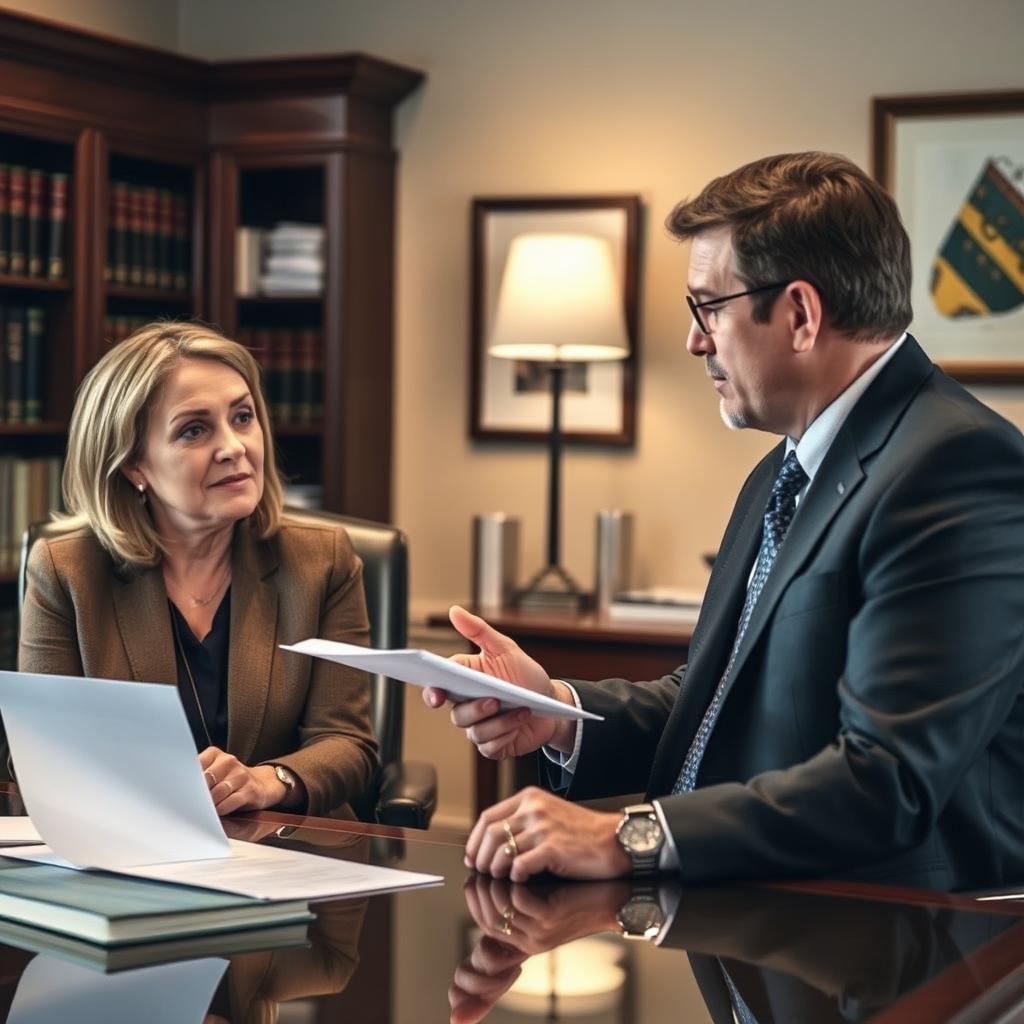
Spousal Support Lawyer Goochland County, VA
Spousal support—often called alimony—is financial assistance one spouse pays to the other during or after a divorce. In Goochland County, Virginia, spousal support matters are adjudicated in the Goochland County Circuit Court, the court of exclusive original jurisdiction for divorce and equitable distribution under Va. Code § 20-96. The court applies a structured set of factors codified at Va. Code § 20‑107.1 to decide whether support is warranted, in what amount, and for what duration. Mr. Sris and the firm’s Of Counsel attorneys represent clients from Goochland, Crozier, Oilville, and throughout Central Virginia in spousal support negotiations, modification proceedings, and enforcement actions. To request a consultation, reach Law Offices Of SRIS, P.C. at (888) 437-7747. Law Offices Of SRIS, P.C. – Advocacy Without Borders.
What Spousal Support Means in Goochland County
Goochland County lies within the Sixteenth Judicial District of Virginia, west of Richmond along the I‑64 corridor. Spousal support cases are filed in the Goochland County Circuit Court, located at 2938 River Road West, Building G, Goochland, VA 23063. Unlike some states, Virginia does not use a fixed formula to calculate alimony. Instead, the Circuit Court weighs the thirteen statutory factors set out in Va. Code § 20‑107.1, including each spouse’s earning capacity, the standard of living established during the marriage, the duration of the marriage, and the contributions each party made to the family’s well‑being. Because the court’s determination is highly fact‑specific, a party’s financial disclosures, employment history, and even allegations of marital fault can significantly affect the support outcome.
The Circuit Court may award temporary spousal support while a divorce is pending—known as pendente lite support—to maintain the status quo until a final decree is entered. After the divorce, the court may order rehabilitative support for a defined period, or, in some cases, indefinite support if the evidence shows that the recipient cannot become self‑sufficient despite reasonable efforts. Our Richmond Location serves clients at the Goochland County courts; contact us at (888) 437‑7747 to discuss how the court’s practices may apply to your situation.
in handling family law matters at Goochland County Circuit Court, we have observed that local practice emphasizes thorough financial documentation and early exchange of discovery. The court expects parties to engage in good‑faith settlement discussions, and when a separation agreement is reached, it can resolve support terms without a contested hearing. Nevertheless, when disputes arise over a spouse’s actual income, concealed assets, or the recipient’s need for ongoing support, Mr. Sris and the firm’s Of Counsel attorneys prepare for litigation, presenting evidence under the statutory factors to seek a fair resolution.
How Mr. Sris and the Firm’s Of Counsel Attorneys Handle Spousal Support Cases
Spousal support matters often involve complex financial analysis. Mr. Sris and the firm’s Of Counsel attorneys take a practical approach: we begin by understanding your financial picture—income, expenses, property division, and any existing support agreements—so we can evaluate what a reasonable support arrangement might look like under Virginia law. We then work with you to either negotiate a separation agreement that addresses support, or, when agreement is not possible, file the necessary pleadings with the Goochland County Circuit Court and present your case to the judge.
Because Virginia is an equitable distribution state rather than a community‑property state, property division and spousal support are considered separately but often influence one another. A spouse who receives a larger share of the marital estate may, for example, need less support. Mr. Sris, a former prosecutor, draws on decades of courtroom experience to anticipate the arguments the opposing side is likely to raise and to build a well‑prepared presentation. The firm’s Of Counsel attorneys contribute experience from prior service in law enforcement, prosecution, and complex civil litigation, ensuring that each case benefits from a diverse perspective. Our goal is to pursue a favorable outcome while keeping you informed at every stage.
About Mr. Sris and the Firm’s Of Counsel Attorneys
Mr. Sris, Owner and Founder of Law Offices Of SRIS, P.C., has practiced family law in Virginia since the firm was founded in 1997. A former prosecutor, he brings a detailed understanding of courtroom dynamics to every spousal support case. Mr. Sris testified before the Virginia House Courts of Justice Committee in support of 2019 HB 635 (chief patron Del. David Bulova). He is admitted in Virginia, Maryland, the District of Columbia, New Jersey, and New York.
The firm’s Of Counsel attorneys include practitioners with backgrounds in former law enforcement, prosecution, and high‑stakes litigation. They support Mr. Sris on spousal support matters, bringing extensive combined legal experience to the analysis of income streams, business valuations, and the statutory support factors. Mr. Sris and the firm’s Of Counsel attorneys represent clients at the Goochland County Circuit Court and throughout Central Virginia.
Frequently Asked Questions
What factors does the Goochland County Circuit Court consider when determining spousal support?
The court considers thirteen statutory factors under Va. Code § 20‑107.1, including each spouse’s earning capacity, the duration of the marriage, the standard of living during the marriage, and the contributions each party made to the family. Additional factors include the age and physical condition of the parties, the property interests of each, and the decisions the couple made regarding employment and career development during the marriage. The judge weighs all factors together; no single factor automatically controls the outcome, and the facts of each case drive the support determination.
Can spousal support be modified after a final decree in Goochland County?
Yes, a spousal support order can be modified if there has been a material change in circumstances since the last order. Common grounds for modification include a substantial increase or decrease in either party’s income, involuntary job loss, or a change in the recipient spouse’s need due to remarriage or cohabitation. The party seeking modification must file a motion with the Goochland County Circuit Court and present evidence of the changed circumstances. The original support order remains in effect until the court rules on the modification request.
Do I need a lawyer for spousal support in Goochland County?
You are not legally required to hire a lawyer, but spousal support outcomes depend heavily on how the statutory factors are presented, and an experienced attorney can help ensure the court has a complete picture of the financial circumstances. A lawyer can assist with gathering and organizing financial documents, negotiating a separation agreement, and, if necessary, presenting your case at a contested hearing. Because the Goochland County Circuit Court’s decisions are fact‑intensive, having counsel who understands the evidence the court expects can make a meaningful difference.
How long does a spousal support case take in Goochland County?
The timeline varies based on whether the case is contested and the court’s calendar. When both parties have signed a separation agreement that addresses support, the agreement can be incorporated into the final divorce decree once the mandatory separation period is met and the matter is ready for entry. Contested spousal support cases, especially those requiring discovery of complex finances or expert testimony, generally take longer. The court schedules hearings on its docket, and the length of each phase depends on the complexity of the issues and the availability of the judge.
Is spousal support taxable in Virginia?
For divorces finalized after December 31, 2018, spousal support payments are not deductible by the payor and are not included in the recipient’s income under federal law. This change was enacted by the Tax Cuts and Jobs Act and applies to all support orders entered or modified after the effective date. Virginia’s state tax treatment generally follows the federal treatment, but parties should consult a tax professional for advice tailored to their specific situation, as tax consequences can affect the net support received and the overall negotiation.
What is the difference between rehabilitative and indefinite spousal support?
Rehabilitative support is awarded for a defined period to allow the recipient spouse to obtain education, training, or work experience needed to become self‑sufficient; indefinite support may be ordered when the recipient is unable to achieve self‑sufficiency despite reasonable efforts. The Goochland County Circuit Court generally prefers rehabilitative support when feasible. Indefinite support is reserved for cases where age, illness, or a long absence from the workforce make it unrealistic for the recipient to close the income gap through further employment, and the evidence must clearly support that conclusion.
For guidance on your specific situation, reach Law Offices Of SRIS, P.C. at (888) 437‑7747.
Related Family Law Practice in Virginia:
Fairfax County Family Law Attorney |
Prince William County Family Law Attorney |
Loudoun County Family Law Attorney |
Chesterfield County Family Law Attorney |
Richmond City Family Law Attorney
Virginia primary sources:
Virginia Code § 20‑107.1 – Spousal support factors
Virginia Code § 20‑96 – Circuit Court divorce jurisdiction
Virginia Circuit Courts
Attorney advertising. Prior results do not guarantee a similar outcome. Results may vary. Case results depend on a variety of factors unique to each case.