
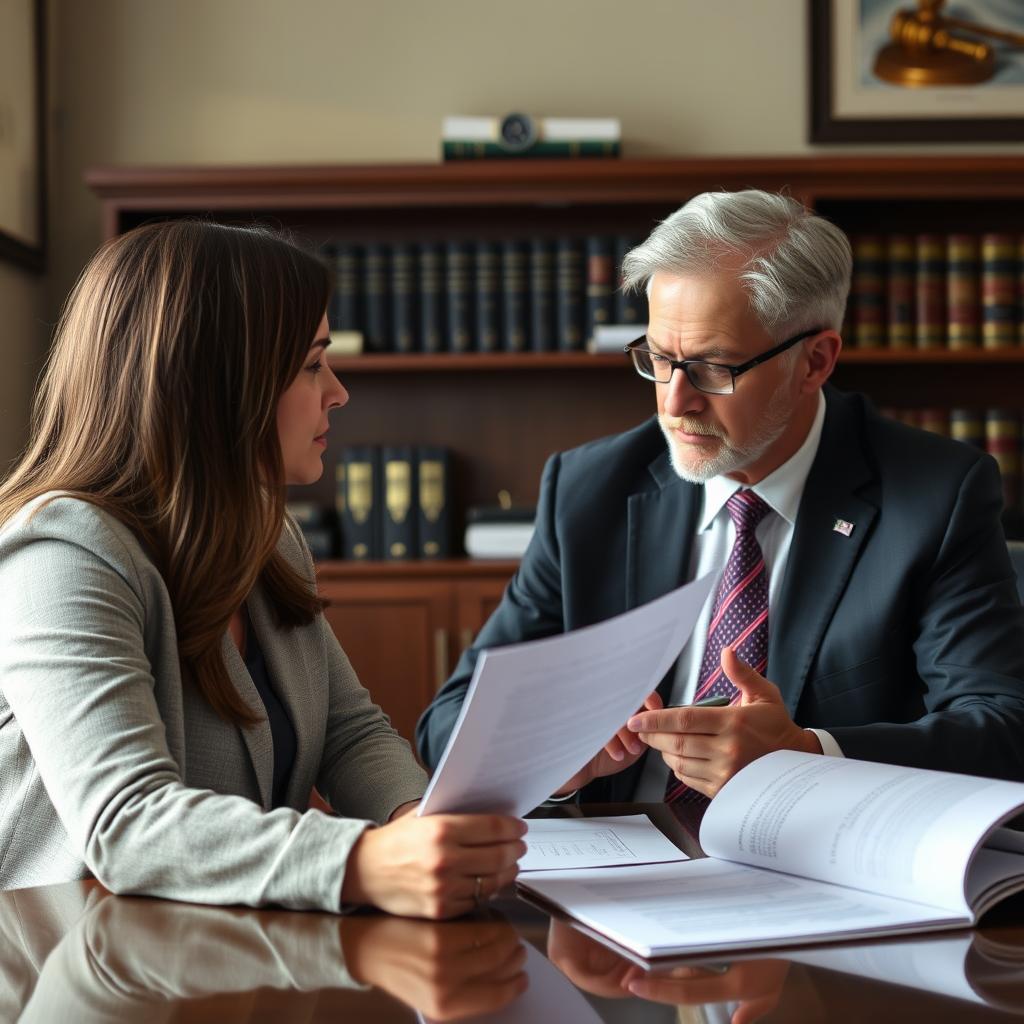
Adultery Divorce Lawyer Virginia, VA
Law Offices Of SRIS, P.C. Concentrates its practice on family law matters, including adultery‑based divorce, across Virginia. Founded in 1997 by Mr. Sris, a former prosecutor, the firm represents clients in the Commonwealth’s Circuit Courts — the tribunals with exclusive jurisdiction over divorce actions. Under Virginia Code § 20‑91(1), adultery is a fault ground for divorce that carries no waiting period. Unlike the six‑month or one‑year separation required for a no‑fault divorce, a petition for divorce on the ground of adultery can proceed as soon as the evidence is assembled. The court’s decisions on equitable distribution and spousal support may also be influenced by a finding of marital misconduct, making it critical to work with counsel who understand how Virginia courts weigh fault. Mr. Sris testified before the Virginia House Courts of Justice Committee in support of 2019 HB 635 (chief patron Del. David Bulova), the legislation that revised the equitable distribution statute. Our team can advise you on how adultery may affect property division, support, and custody. Reach Law Offices Of SRIS, P.C. at (888) 437‑7747 to request a consultation. Law Offices Of SRIS, P.C. – Advocacy Without Borders.
Adultery as a Fault Ground in Virginia Divorce
Virginia law provides several fault‑based grounds for divorce, and adultery is among the most significant. Adultery means voluntary sexual intercourse between a married person and someone other than the spouse. The party alleging adultery must present evidence that is clear and convincing, and the testimony of the accusing spouse alone is not sufficient; corroboration is required. Unlike many other fault grounds, adultery has no associated waiting period — once the proof has been presented, the court may grant the divorce immediately.
Beyond dissolving the marriage, a finding of adultery can substantially affect the financial outcome of the case. While Virginia is an equitable distribution state, the court may consider marital misconduct under Va. Code § 20‑107.3 when dividing property. This does not mean the court will award all marital assets to the innocent spouse, but a proven adultery claim can shift the distribution in that spouse’s favor. Similarly, under Va. Code § 20‑107.1, adultery can impact spousal support; if the adultery occurred after separation, it may bar or limit an award of support to the offending spouse. Each case is evaluated on its specific facts, and the court exercises discretion within the statutory framework.
How Adultery Affects Equitable Distribution and Spousal Support
In a Virginia divorce, the court first classifies the parties’ property as separate, marital, or hybrid. Marital property is divided equitably — not necessarily equally — based on a list of statutory factors. Adultery does not automatically strip a spouse of his or her share of marital assets, but it can be a persuasive factor when the court weighs the circumstances that contributed to the dissolution of the marriage. For example, if the adulterous spouse spent marital funds on the extramarital relationship, the court may order reimbursement or a larger share of remaining property to the other party.
Spousal support determinations follow a similar path. The court examines multiple factors, including the earning capacity and needs of each party, the duration of the marriage, and the grounds for divorce. Adultery that occurred before separation is one factor among many; however, if the adultery occurred after separation and is proved, the court may deny support to the adulterous spouse altogether. These outcomes are not automatic; they depend on the unique evidence and arguments presented in each case.
Filing an Adultery‑Based Divorce in Virginia Circuit Courts
Virginia law vests exclusive original jurisdiction over divorce actions in the Circuit Courts (Va. Code § 20‑96). A petition for divorce must be filed in the county or city where either spouse resides. Once the complaint is filed and served on the other party, the case moves through discovery, where each side exchanges relevant information. If the parties cannot reach a settlement, the matter proceeds to a trial before the judge.
During the trial, the spouse alleging adultery must present competent evidence — often in the form of testimony, documents, or electronic records — that meets the clear‑and‑convincing standard. The accused spouse has the opportunity to challenge the evidence. If the court finds that adultery has been proved, it can grant the divorce immediately and consider how the misconduct should affect property division and support. The court’s scheduling and the complexity of the evidence determine the timeline, which varies by case.
Law Offices Of SRIS, P.C. Appears in Circuit Courts throughout the Commonwealth. Whether your case is in Fairfax County, Prince William County, Loudoun County, or any other Virginia locality, Mr. Sris and his Of Counsel team have the multi‑jurisdiction experience to guide you through the process.
About Mr. Sris and His Of Counsel Team
Mr. Sris, Owner and Founder of Law Offices Of SRIS, P.C., founded the firm in 1997 and brings the perspective of a former prosecutor to every family law matter. He is admitted in Virginia, Maryland, the District of Columbia, New Jersey, and New York. Mr. Sris testified before the Virginia House Courts of Justice Committee in support of 2019 HB 635 (chief patron Del. David Bulova), which amended the equitable distribution statute governing how property is divided in divorce. His legislative involvement provides him with a detailed understanding of Virginia’s evolving family law landscape.
Mr. Sris and his Of Counsel bring over 120 years of combined legal experience, and the firm has secured over 4,739 documented results for clients. Results may vary. Of Counsel attorneys are engaged through Excella and work collaboratively with Mr. Sris to handle adultery‑based divorce cases across the state.
Frequently Asked Questions
What is the legal definition of adultery in Virginia?
Adultery is voluntary sexual intercourse between a married person and someone other than his or her spouse. Virginia courts require clear and convincing evidence to prove adultery in a divorce action. Proof may come from direct or circumstantial evidence, but the testimony of the accusing spouse, standing alone, is not enough; corroboration is needed. The definition is grounded in Virginia Code § 20‑91(1), which lists adultery as one of the fault‑based grounds for divorce. For guidance on your specific situation, reach Law Offices Of SRIS, P.C. at (888) 437‑7747.
How does adultery affect property division in a Virginia divorce?
A finding of adultery can influence a Virginia court’s equitable distribution decision but does not guarantee that the innocent spouse will receive all the marital assets. Under Va. Code § 20‑107.3, marital misconduct, including adultery, is one factor the judge may consider. If the adulterous spouse used marital funds on the affair, the court may require reimbursement or award a larger share of remaining property to the other party. The outcome depends on the specific evidence and the judge’s discretion. To discuss the details of your matter, contact Law Offices Of SRIS, P.C. at (888) 437‑7747.
Can my spouse and I still get a no‑fault divorce if adultery occurred?
Yes, you may still obtain a no‑fault divorce in Virginia if you and your spouse have lived separate and apart for the required period — six months with a separation agreement and no minor children, or one year otherwise. Adultery does not bar a no‑fault divorce; it simply gives you the option of filing a fault‑based divorce without a waiting period. Many couples choose the no‑fault route for privacy and to avoid litigation. For a consultation, reach Mr. Sris and his Of Counsel at (888) 437‑7747.
Do I need a lawyer for an adultery divorce in Virginia?
While you are not legally required to hire a lawyer, adultery divorce cases involve complex evidence rules and asset‑division issues that can significantly affect your financial future. Proving adultery to the clear‑and‑convincing standard demands a thorough presentation of evidence, and the interplay between fault and property division is highly fact‑specific. Legal guidance can help ensure your rights are protected. To discuss your situation, contact Law Offices Of SRIS, P.C. at (888) 437‑7747.
What evidence is needed to prove adultery in a Virginia court?
Proof of adultery in Virginia requires clear and convincing evidence, which may include testimony from witnesses, hotel receipts, phone records, emails, texts, photographs, or admissions by the adulterous spouse. The accusing spouse’s own testimony must be corroborated; a private investigator’s report can also be useful. Because the standard is high, careful preparation is essential. If you are considering an adultery‑based divorce, reach Law Offices Of SRIS, P.C. at (888) 437‑7747 to request a consultation.
Related Family Law Lawyers
Fairfax County Family Law Lawyer · Fairfax City Family Law Lawyer · Falls Church Family Law Lawyer
Additional Resources
For a full statutory analysis of divorce in Virginia, visit our divorce practice page on SRISLawyer.com. For a client strategy guide on navigating a fault‑based divorce, contact our firm.
Virginia Primary Sources
Virginia Code Title 20 (Domestic Relations) · Virginia Courts
Attorney advertising. Prior results do not guarantee a similar outcome. Case results depend on a variety of factors unique to each case. Results may vary. Attorney responsible for this advertising: Mr. Sris.