
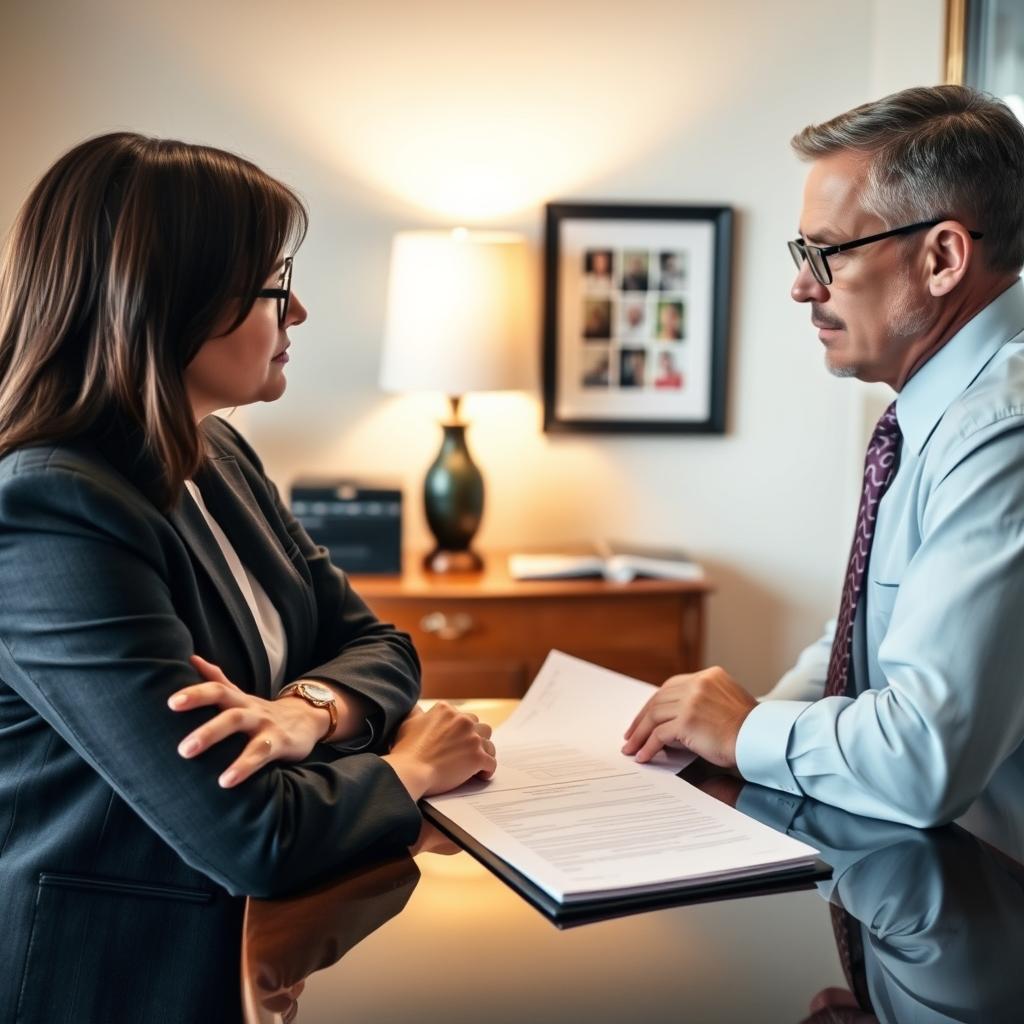
Alimony Modification Lawyer Louisa County, VA
Alimony modification proceedings in Louisa County, Virginia, require careful handling of legal and financial issues. Whether you are seeking to reduce or increase spousal support payments after a divorce, the court bases its decision on whether there has been a material change in circumstances. Mr. Sris, Owner and Founder of Law Offices Of SRIS, P.C., has practiced family law in Virginia since 1997. He works with the firm’s Of Counsel attorneys to represent clients in modification actions before the Louisa County Circuit Court. Admitted in Virginia, Maryland, the District of Columbia, New Jersey, and New York, Mr. Sris brings multi-state experience to each matter. To request a consultation about an alimony modification, call (888) 437-7747. Law Offices Of SRIS, P.C. – Advocacy Without Borders.
What Alimony Modification Means in Louisa County, Virginia
In Virginia, spousal support is governed by Va. Code § 20‑107.1. A payor or payee may petition the court to modify an existing alimony award when there has been a material change in circumstances since the last order. Common grounds for seeking a modification include a substantial change in either party’s income, loss of employment, retirement, remarriage of the recipient, cohabitation in a relationship analogous to marriage, or a change in the recipient’s financial needs.
The Louisa County Circuit Court, located at 100 West Main Street, Louisa, VA 23093, has jurisdiction over alimony modification cases. Parties file a motion to modify in the same court that issued the original divorce decree or support order. The judge reviews evidence of changed circumstances and weighs the statutory factors under Va. Code § 20‑107.1 before determining whether an increase, decrease, or termination of alimony is warranted. Our Richmond location serves clients throughout Louisa County, including the communities of Louisa, Mineral, and Zion Crossroads. Mr. Sris and the firm’s Of Counsel attorneys appear regularly at the Louisa County Circuit Court and understand the local procedures that affect modification hearings.
Because alimony modification disputes involve detailed financial documentation, tax returns, pay stubs, and sometimes vocational evaluations, preparation is critical. The party requesting a change must present clear and convincing evidence that the alleged change is both real and lasting. A temporary setback is usually insufficient to modify a permanent or indefinite support award. An experienced family law attorney helps gather the necessary records and structure the request in a way the court can evaluate efficiently.
How Mr. Sris and the Firm’s Of Counsel Attorneys Handle Alimony Modification Cases
Mr. Sris and the firm’s Of Counsel attorneys approach each alimony modification matter by first thoroughly reviewing the circumstances that led to the original support order. They assess the client’s current financial situation, the other party’s circumstances, and the likelihood that a judge will find a material change. This initial evaluation often includes a detailed examination of tax returns, bank statements, employment contracts, and retirement account statements.
Once the factual basis for a modification is established, the legal team prepares and files the appropriate motion with the Louisa County Circuit Court. The motion must comply with Virginia procedural rules and include specific allegations supporting the claimed change in circumstances. If the parties can agree on a modified support amount, the court will typically approve a consent order. When an agreement is not possible, the matter proceeds to a hearing where both sides present evidence. Mr. Sris and the firm’s Of Counsel attorneys prepare thoroughly for each hearing, organizing documentary evidence and, when needed, working with vocational attorneys or forensic accountants to substantiate income changes.
About Mr. Sris and the Firm’s Of Counsel Attorneys
Mr. Sris is a former prosecutor who founded Law Offices Of SRIS, P.C. in 1997. He is admitted to practice in Virginia, Maryland, the District of Columbia, New Jersey, and New York. Mr. Sris testified before the Virginia House Courts of Justice Committee in support of 2019 HB 635 (chief patron Del. David Bulova), a bill that revised aspects of Virginia’s equitable distribution and spousal support framework. His experience includes handling complex family law matters throughout the Commonwealth.
The firm’s Of Counsel attorneys bring extensive combined legal experience in family law, civil litigation, and related practice areas. They work alongside Mr. Sris to provide clients with thorough representation in alimony modification proceedings. Each attorney is independent Of Counsel to the firm, ensuring that clients benefit from a broad range of perspectives while receiving focused attention on their legal needs.
Frequently Asked Questions
When can I ask the court to change my alimony in Louisa County, Virginia?
Alimony can be modified when a material change in circumstances has occurred since the last support order was entered. In Louisa County, you file a motion to modify with the Circuit Court. Examples of material changes include a significant increase or decrease in either party’s income, involuntary job loss, retirement, remarriage of the recipient, or cohabitation in a marriage-like relationship. The court will review evidence of the change and, if satisfied, may adjust the amount or terminate support entirely. It is advisable to begin the process as soon as a change becomes apparent, because support obligations continue until the court issues a new order.
What factors does the Louisa County Circuit Court consider in an alimony modification case?
The court evaluates the same statutory factors listed in Va. Code § 20‑107.1 that originally determined the support. These include the parties’ current incomes, earning capacity, reasonable needs, any contributions to the other’s education or training, the standard of living during the marriage, the duration of the marriage, and whether either party committed fault experienced to the divorce. The judge considers whether the alleged change is material—meaning it is substantial, real, and likely to continue—and how that change affects the balance that was struck in the original order. The court has broad discretion and aims to reach a result that is fair under the new circumstances.
Do I need a lawyer for an alimony modification in Louisa County?
You are not legally required to have a lawyer, but an experienced attorney can improve the odds of a favorable outcome. Alimony modification involves detailed financial evidence, procedural rules, and legal arguments that can be difficult to manage on your own. An attorney can help you gather the necessary documentation, frame your request persuasively, and respond to the other side’s objections. If the opposing party is represented, trying to represent yourself can put you at a significant disadvantage. For a consultation about your situation, reach Law Offices Of SRIS, P.C. at (888) 437‑7747.
How long does an alimony modification case take in Louisa County?
The timeline for an alimony modification case varies depending on whether the matter is contested and the court’s schedule. If both parties agree to a modification and submit a consent order, the process can be completed in a few months after filing. Contested modifications, where the parties disagree about the need for or amount of a change, may take considerably longer because of discovery, witness preparation, and the need for an evidentiary hearing. The Louisa County Circuit Court sets its own calendar, so the specific time to a final ruling depends on the judge’s docket and the complexity of the issues involved.
Can I stop paying alimony if I lost my job in Virginia?
A job loss may be a basis for seeking a modification, but you cannot unilaterally stop paying court-ordered alimony. Until the court enters a new order modifying or suspending the support obligation, the original order remains in effect. Failing to pay can lead to contempt proceedings, wage garnishment, and accrual of arrears. The proper step is to file a motion to modify immediately after the change in employment, supported by documentation of the job loss and evidence of your efforts to find new work. The court may then reduce or suspend payments retroactive to the filing date.
What is the difference between modifying alimony and enforcing an existing order?
Modification changes the amount or duration of alimony, while enforcement seeks to compel compliance with the existing order. In Louisa County, if a former spouse stops paying the ordered support, the recipient can file a show‑cause motion asking the court to hold the non‑payer in contempt. Enforcement remedies include wage withholding, garnishment, and, in serious cases, jail time. Modification, by contrast, is appropriate when circumstances have changed and the current support amount is no longer fair or workable. Sometimes a case involves both issues simultaneously; an experienced attorney can help you pursue the correct remedy for your situation.
For official Virginia statutes, see the Virginia Code Title 20 (spousal support provisions). For court information, visit the Virginia Judicial System.
Attorney advertising. Prior results do not guarantee a similar outcome. Results may vary.
Case results depend on a variety of factors unique to each case.