
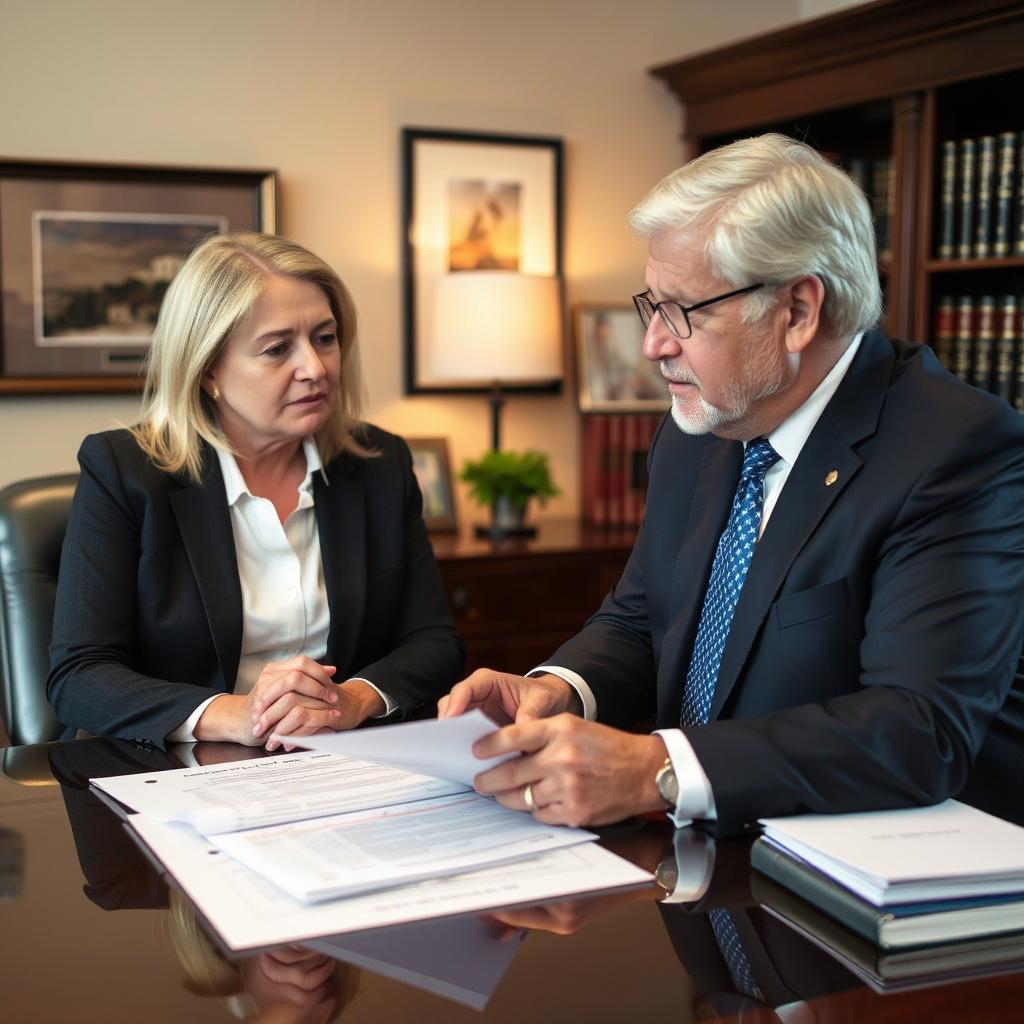
Complex Property Division Lawyer James City County, VA
When a marriage ends with significant assets, dividing property can become one of the most contentious aspects of a divorce. In James City County, Virginia, complex property division involves far more than splitting a bank account—it can require valuation of businesses, professional practices, retirement accounts, investment portfolios, and real estate holdings. Virginia is an equitable distribution state, meaning marital property is divided fairly but not necessarily equally under Va. Code § 20‑107.3. The James City County Circuit Court, located at 5201 Monticello Ave, Suite 4, Williamsburg, VA 23188, has exclusive jurisdiction over divorce and property division matters. Mr. Sris and his Of Counsel at Law Offices Of SRIS, P.C. represent clients throughout James City County—including Williamsburg, Norge, Toano, and Lightfoot—in complex property matters. To discuss your situation, reach the firm at (888) 437‑7747. Law Offices Of SRIS, P.C. – Advocacy Without Borders.
What Complex Property Division Means in James City County, Virginia
Virginia classifies property in a divorce as either separate (owned before the marriage or received by gift or inheritance), marital (acquired during the marriage by either spouse), or hybrid (part marital, part separate). The James City County Circuit Court, which is part of the Ninth Judicial District, applies the eleven factors listed in Va. Code § 20‑107.3 to determine an equitable distribution of marital assets after a divorce is granted. Those factors include each spouse’s monetary and non‑monetary contributions to the marriage, the duration of the marriage, the age and health of the parties, and the tax consequences of the division.
Complex property division in James City County often requires forensic accountants or business valuation attorneys to determine the value of interests that are not easily liquidated. The court may need to assess the worth of a family business, professional practice, stock options, restricted stock units, deferred compensation, or multiple real estate parcels. The Williamsburg area, with its mix of long‑time residents, military families, and professionals tied to the College of William & Mary and the tourism industry, can present distinctive asset portfolios. Mr. Sris and his Of Counsel are familiar with the local court procedures and the evidentiary demands of the James City County Circuit Court, which sits at 5201 Monticello Avenue. The courthouse is accessible via I‑64, Route 60, and Route 199 (Humelsine Parkway), and serves communities including Norge, Toano, and Lightfoot.
How Mr. Sris and His Of Counsel Handle Complex Property Division in James City County
Effective representation in a complex property case begins with a thorough inventory of all assets and debts. Mr. Sris and his Of Counsel help clients identify whether property is marital or separate, trace the source of funds used to acquire assets, and uncover any undisclosed or undervalued holdings. When a business or professional practice is involved, they work with qualified valuation professionals to analyze financial statements, goodwill, and future earning capacity. In many matters, a comprehensive separation agreement can resolve the division without trial, but if the parties cannot agree, the matter proceeds to an equitable distribution trial before the Circuit Court.
The process is tailored to the facts of the case. Some cases involve straightforward asset division that can be resolved through negotiation; others require litigation over valuation disagreements or claims of dissipation of marital assets. Throughout the representation, Mr. Sris and his Of Counsel maintain communication with clients, explain the statutory factors, and prepare thoroughly for each hearing. Because Virginia law permits pendente lite relief under Va. Code § 20‑103, temporary support or exclusive use of the family residence can be sought while the divorce is pending.
About Mr. Sris and His Of Counsel
Mr. Sris, Owner and Founder of Law Offices Of SRIS, P.C., has practiced law since the firm was founded in 1997. He is a former prosecutor and is admitted in Virginia, Maryland, the District of Columbia, New Jersey, and New York. Mr. Sris testified before the Virginia House Courts of Justice Committee in support of 2019 HB 635 (chief patron Del. David Bulova). That legislation revised the equitable distribution statute, Va. Code § 20‑107.3(g), which governs how retirement and pension assets are divided in a divorce. Mr. Sris and his Of Counsel bring over 120 years of combined legal experience. Results may vary. They have documented more than 4,739 case results across all practice areas since 1997.
Frequently Asked Questions
What is considered “complex” property division in Virginia?
Complex property division involves assets that require valuation beyond a simple bank balance, such as businesses, professional practices, retirement accounts, stock options, or multiple real estate holdings. In James City County, the Circuit Court applies Va. Code § 20‑107.3 to classify and divide these assets equitably. The process often requires forensic accountants, business appraisers, or pension valuation attorneys to determine fair market value and marital share. Marital property subject to division includes everything acquired by either spouse during the marriage, regardless of whose name is on the title. Separate property—assets owned before marriage or received as a gift or inheritance—is generally excluded from the marital estate.
How does the court divide a business or professional practice in James City County?
The court does not physically split a business; instead it determines the value of the marital interest in the business and awards the non‑owner spouse a monetary share or other assets to offset that value. Valuation attorneys analyze financial records, goodwill, and market comparables. The James City County Circuit Court may consider the owner’s efforts during the marriage, the length of the marriage, and whether non‑marital contributions increased the business’s value. If the business was started before the marriage, only the increase in value during the marriage is typically marital. Mr. Sris and his Of Counsel work with qualified professionals to present valuation evidence and negotiate settlement terms that reflect the business’s true worth.
What factors does a James City County judge consider when dividing property?
A Virginia judge must consider eleven statutory factors under Va. Code § 20‑107.3, including each spouse’s contributions, the duration of the marriage, the age and health of the parties, and the tax implications of any division. The court also looks at how and when property was acquired, the debts and liabilities of each spouse, and whether one party’s actions caused the breakdown of the marriage. No single factor is controlling; the judge weighs them collectively to reach a fair, though not necessarily equal, distribution. In complex cases with high‑value assets, presenting a clear, well‑supported picture of the marital estate is essential.
Can we settle property division without going to trial in James City County?
Yes, most property division cases resolve through a written separation agreement that addresses all assets, debts, and spousal support. James City County does not require mediation before trial, but many couples choose mediation to negotiate the terms. A signed separation agreement becomes binding and, if incorporated into the final divorce decree, enforceable by the court. Mr. Sris and his Of Counsel assist clients in drafting or reviewing proposed agreements to ensure the division is thorough and fair. Litigation remains available if the parties cannot agree on key issues such as business valuation or classification of disputed assets.
How is a pension or 401(k) divided in a Virginia divorce?
Pensions, 401(k) plans, and other retirement accounts are generally marital property to the extent they were accumulated during the marriage, and they are divided using a Qualified Domestic Relations Order or similar court order. The marital share is the portion earned from the date of marriage to the date of separation. Mr. Sris’s testimony in support of 2019 HB 635 addressed procedural issues related to the division of retirement plans under Va. Code § 20‑107.3(g). Dividing these assets correctly requires careful calculation of the marital interest and compliance with plan‑administrator requirements. Errors in a QDRO can delay distribution or trigger tax penalties, so experienced handling is important.
Does the firm handle property division for international or multi‑state assets?
Yes, Mr. Sris and his Of Counsel have experience with cases that involve assets located in multiple states or outside the United States. James City County residents who own property abroad, hold foreign accounts, or have business interests in other jurisdictions can present additional complexity. The firm coordinates with local professionals where needed to locate, value, and address such holdings. While Virginia courts have authority over the personal jurisdiction and marital estate of the parties before them, cross‑border issues may require careful attention to conflict‑of‑laws principles and valuation work carried out internationally.
Virginia law requires equitable distribution of marital property upon divorce under Va. Code § 20‑107.3, which lists eleven statutory factors for the court to consider.
Source: Virginia Code Title 20, Chapter 6. Read the statute
Reviewed by Mr. Sris, admitted in VA/MD/DC/NJ/NY.
Additional family law pages for nearby communities:
Williamsburg Family Law Lawyer ·
York County Family Law Lawyer ·
Fairfax County Family Law Lawyer
Virginia primary legal resources:
Virginia Code Title 20 (Domestic Relations) ·
Virginia Judicial System
Attorney advertising. Prior results do not guarantee a similar outcome. Results may vary.
Case results depend on a variety of factors unique to each case.