
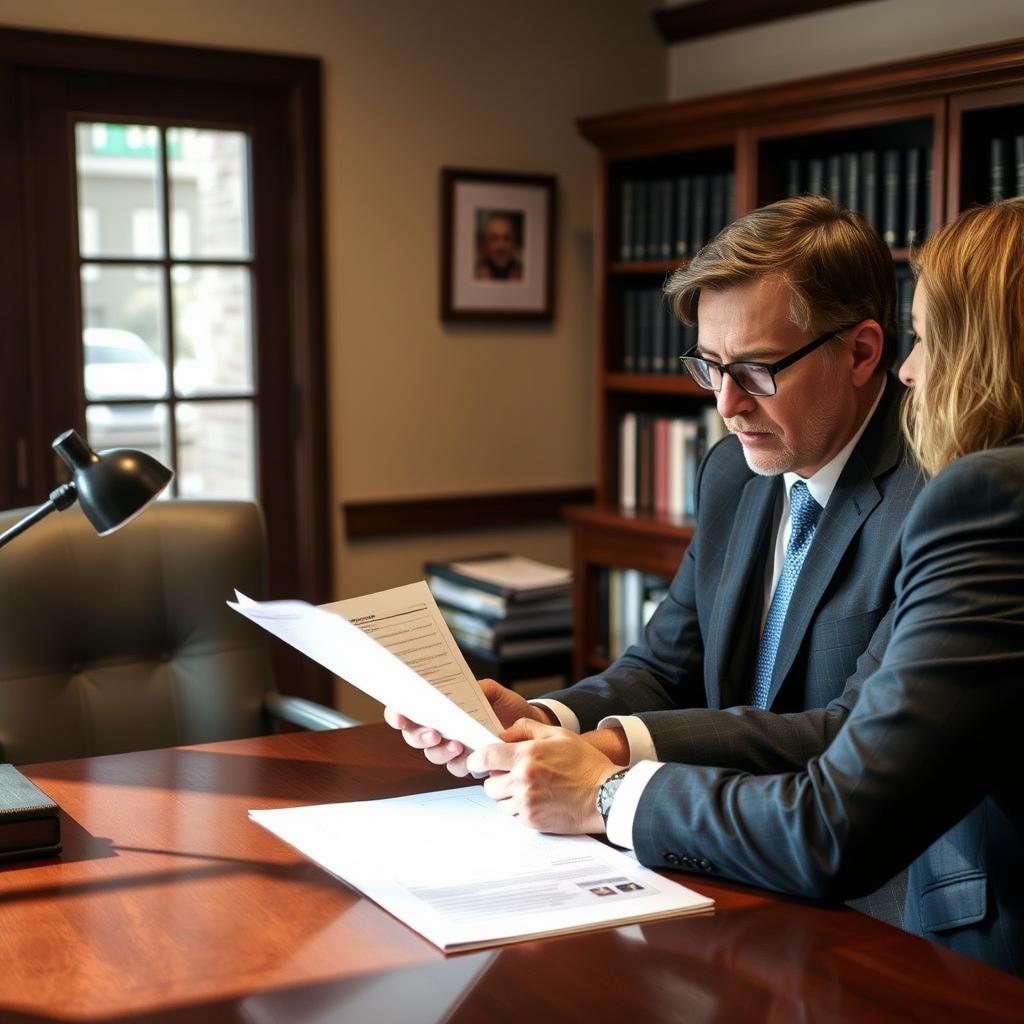
Divorce Decree Modification Lawyer Rappahannock County, VA
Life circumstances change after a divorce. A spousal support obligation that was fair five years ago may become unmanageable after a job loss. A custody order that worked when children were toddlers may no longer serve their needs as teenagers. In Rappahannock County, these post-divorce modifications are handled primarily in the Rappahannock County Juvenile & Domestic Relations District Court for custody, visitation, and support, and in the Rappahannock County Circuit Court at 250 Gay Street, Suite 1, Washington, VA 22747 for matters tied to the original divorce decree or equitable distribution — including spousal support modifications. Mr. Sris, Owner and Founder of Law Offices Of SRIS, P.C., and the firm’s Of Counsel attorneys, represent clients seeking to adjust divorce decrees in Rappahannock County and throughout Virginia’s 20th Judicial District. To discuss whether your changed circumstances may support a modification, reach our location at (888) 437-7747. Law Offices Of SRIS, P.C. – Advocacy Without Borders.
What Divorce Decree Modification Means in Rappahannock County
In Virginia, a divorce decree is not necessarily the final word. Under Va. Code § 20-91 and related statutes, courts retain authority to modify certain provisions of a final decree — including spousal support under Va. Code § 20-107.1, child support under Va. Code § 20-108.1, and custody or visitation under Va. Code § 20-124.3 — when a material change in circumstances occurs. The Rappahannock County Juvenile & Domestic Relations District Court has concurrent jurisdiction over custody, visitation, and child support modifications, while the Rappahannock County Circuit Court hears spousal support modifications and any issues tied to the equitable distribution order originally entered. Rappahannock County, as part of the 20th Judicial District, shares judges with Fauquier and Loudoun Counties, which means local practice can reflect a blend of rural and suburban judicial approaches.
Because Rappahannock County covers communities such as Washington, Sperryville, and Flint Hill, and stretches along the eastern boundary of Shenandoah National Park, many families in the area experience both relocation and employment changes that can trigger a need to revisit divorce decrees. Virginia courts require evidence that the change in circumstances is material and ongoing — not temporary or anticipated at the time of the original order. Mr. Sris and the firm’s Of Counsel attorneys can help clients in Rappahannock County identify whether their situation meets that threshold and, when appropriate, present the modification request to the proper court.
How Mr. Sris and the Firm’s Of Counsel Attorneys Handle Divorce Decree Modification Cases
When a client in Rappahannock County inquires about modifying a divorce decree, the first step is an assessment of the factual changes: Has income increased or decreased substantially? Has a parent relocated or remarried? Has a child’s need for educational or medical support shifted? Mr. Sris and the firm’s Of Counsel attorneys draw on extensive experience in Virginia family law to identify which changes are likely to satisfy the court’s material-change standard, and which are not. The goal is to avoid unnecessary litigation when the facts do not support a modification, and to move efficiently when they do.
Once the case is filed in the appropriate Rappahannock County court — either the Juvenile & Domestic Relations District Court or the Circuit Court — the firm handles all procedural steps, including service of process, filing of financial statements, and, when needed, discovery. Virginia law requires that modification petitions include verified financial information; Mr. Sris and the firm’s Of Counsel attorneys ensure compliance with those requirements. In spousal support matters, the court considers the 13 factors enumerated in Va. Code § 20-107.1, which include the paying spouse’s ability to continue the payments and the receiving spouse’s need. In child support matters, the Virginia statutory guidelines apply based on combined gross income. Contested modification cases may proceed to an evidentiary hearing, while agreed modifications can be resolved through negotiation and a consent order submitted to the judge. The firm’s approach is to pursue the least contentious path that protects the client’s rights, while being fully prepared to litigate when necessary.
About Mr. Sris and the Firm’s Of Counsel Attorneys
Mr. Sris founded Law Offices Of SRIS, P.C. in 1997 and has practiced family law in Virginia for decades. A former prosecutor, he brings a litigation perspective to family law matters that benefits clients in contested modification proceedings. Mr. Sris testified before the Virginia House Courts of Justice Committee in support of 2019 HB 635 (chief patron Del. David Bulova), a bill that revised the equitable distribution statute. His hands‑on approach keeps him closely involved in complex modification cases across the Commonwealth. The firm’s Of Counsel attorneys bring additional family law experience, including familiarity with Rappahannock County court procedures. Together, Mr. Sris and the firm’s Of Counsel attorneys have documented case results in Rappahannock County — 40 total documented case results across all practice areas, with a 98% favorable outcome rate. Results may vary. in any future matter.
Frequently Asked Questions
What are the grounds for modifying a divorce decree in Rappahannock County, Virginia?
Modification requires a material change in circumstances since the date of the original decree — not just dissatisfaction with the old order. For spousal support, the change must be substantial and affect the paying or receiving spouse’s financial situation. For custody, the court considers the child’s best interests under Va. Code § 20‑124.3, including any changes that affect those factors. Child support is modifiable when the presumptive guideline amount shifts by a certain percentage, often based on a change in income. The Rappahannock County Juvenile & Domestic Relations District Court handles custody and support modifications, while the Circuit Court addresses spousal support changes tied to the divorce decree. To discuss whether your circumstances qualify, reach Law Offices Of SRIS, P.C. at (888) 437-7747.
How long does a divorce decree modification take in Rappahannock County?
An uncontested modification with an agreed order can be resolved relatively quickly, while a contested hearing that requires discovery and testimony usually takes longer. The timeline depends on the court’s calendar, whether the other party consents, and the complexity of the financial or custody issues. Rappahannock County Circuit Court at 250 Gay Street, Suite 1, Washington, VA hears spousal support and equitable-distribution-related modifications. The Juvenile & Domestic Relations District Court handles custody and support modifications. Mr. Sris and the firm’s Of Counsel attorneys can provide a realistic timeframe once they understand the specifics of your case.
Can child support be modified retroactively in Virginia?
In Virginia, child support modifications generally apply prospectively from the date of filing, not retroactively before that date. Under Va. Code § 20-108.1, the court may modify support as of the petition filing date, but arrears that accumulated before filing are not typically forgiven. If a parent’s income dropped months before the modification was filed, the court will not order support reduced for that earlier period. Because timely filing matters, it is advisable to seek legal guidance as soon as a substantial change occurs. For a consultation, reach Mr. Sris and the firm’s Of Counsel attorneys at (888) 437-7747.
Is there a waiting period to modify spousal support in Virginia?
Virginia law does not impose a fixed waiting period before a spousal support modification can be requested, but the change in circumstances must be material and ongoing. Under Va. Code § 20-107.1, the paying spouse or the receiving spouse may petition the Rappahannock County Circuit Court to increase, decrease, or terminate spousal support when a substantial change occurs — examples include involuntary job loss, remarriage, or a significant change in health. Temporary setbacks usually do not warrant a modification. Each case turns on its own facts, and experienced guidance helps avoid futile petitions that waste time and court resources.
Do I need a lawyer to modify a divorce decree in Rappahannock County?
Virginia law does not require a lawyer to file a modification petition, but the procedural rules and burden of proof make professional representation important in contested matters. A petitioner must present evidence of the material change and satisfy the applicable statutory factors. Missing a filing deadline or failing to include required financial documentation can delay or defeat the request. The Rappahannock County courts have specific local procedures; Mr. Sris and the firm’s Of Counsel attorneys are familiar with these rules and regularly appear in the courts serving Washington, Sperryville, and Flint Hill. To discuss the details of your matter, contact Law Offices Of SRIS, P.C. at (888) 437-7747.
How is a modification different from an appeal of a divorce decree?
A modification asks the court to change a provision because circumstances have changed after the decree was entered, while an appeal challenges legal errors made in the original proceeding. In Rappahannock County, modification petitions are filed in the same court that entered the original order — usually the Circuit Court — and are based on new facts. An appeal, by contrast, goes to the Virginia Court of Appeals and is limited to the trial record. Time limits for an appeal are strict; modification can be sought as long as the changed circumstances persist. Knowing which route applies to your situation is essential.
Attorney advertising. Prior results do not guarantee a similar outcome. Case results depend on a variety of factors unique to each case. Results may vary.