
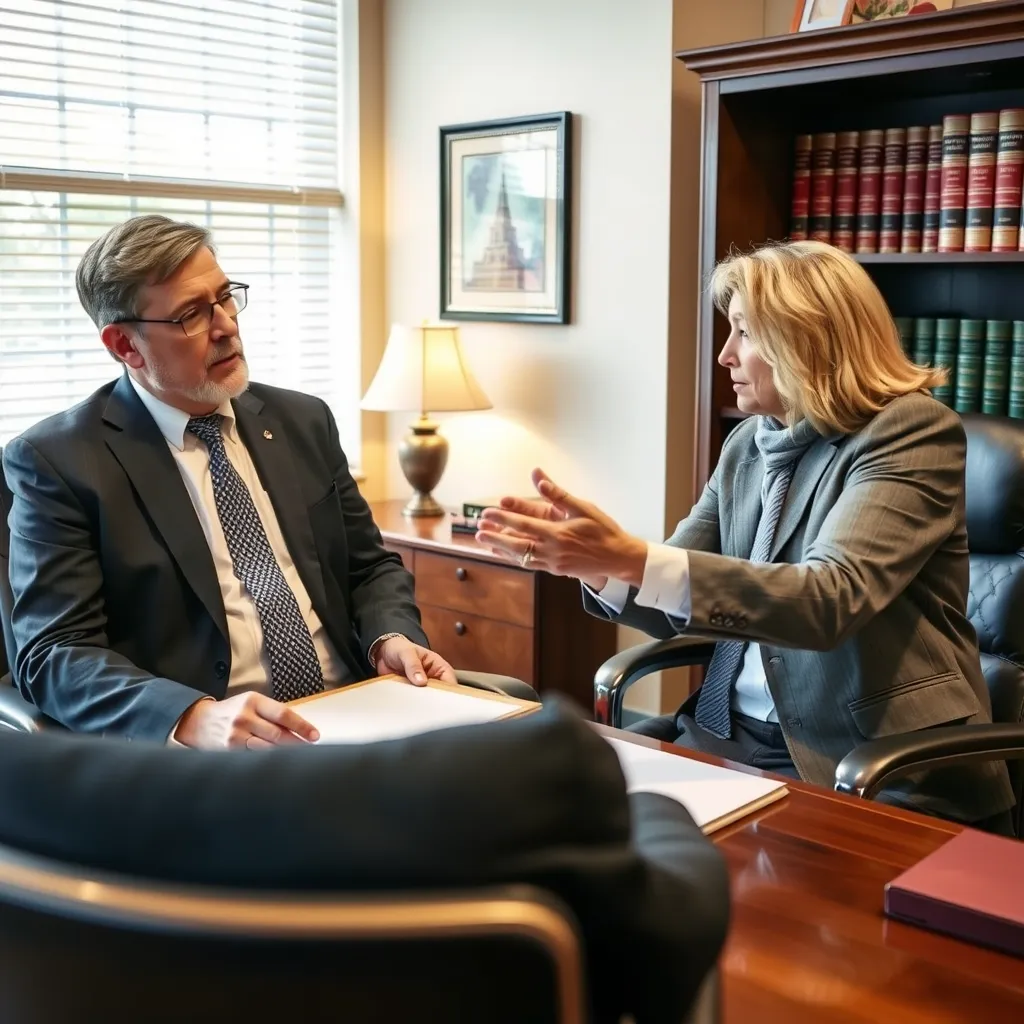
Equitable Distribution Lawyer in Manassas, VA
Navigating the dissolution of a marriage is inherently emotional, complex, and often financially overwhelming. When assets and debts accumulated over years are spread across multiple jurisdictions—from real estate in Prince William County to retirement accounts spanning several states—the process of dividing them requires specialized legal knowledge. In Virginia, the goal is not necessarily “equal” division, but rather an “equitable” one. This critical distinction is at the heart of equitable distribution law.
At Law Offices Of SRIS, P.C., we understand that every divorce case is unique. We do not offer a one-size-fits-all solution. Instead, our approach involves a meticulous, fact-driven analysis of your entire financial picture to ensure that the division of marital assets and debts is fair, legally sound, and tailored to help you build a stable future. If you are seeking an experienced Equitable Distribution Lawyer in Manassas, VA, our team provides the diligent advocacy necessary to protect your rights and secure a favorable outcome.
We guide clients through every phase of the process, from initial discovery and financial accounting to negotiating settlement agreements or representing you before the court. Our commitment is to provide clear counsel while navigating the complexities of Virginia family law, allowing you to focus on healing and rebuilding your life.
What Does Equitable Distribution Mean in Virginia?
Equitable distribution is the legal concept that governs how marital property—assets and debts acquired by either spouse during the marriage—should be divided. It is a fundamental part of Virginia divorce law, designed to ensure a fair division of resources so that both parties can achieve financial stability post-divorce.
It is crucial to understand that “equitable” does not mean mathematically “equal.” While equal division might sound appealing, the law recognizes that fairness depends on numerous factors. A judge or mediator will look at a constellation of evidence—including the length of the marriage, the financial contributions of both parties (both monetary and non-monetary), the earning capacity of each spouse, and the needs of any minor children—to determine what is equitable. Our comprehensive divorce lawyer practice helps clients understand these factors before they become points of contention in court.
The Difference Between Equitable and Equal Division
This distinction is one of the most common points of confusion for divorce clients. In many states, “equal division” means a 50/50 split. Virginia law, however, mandates equitable distribution. This means that while the division must be fair, the final percentage split can deviate from 50/50 if the totality of circumstances dictates it. For example, if one spouse sacrificed a career to raise children, a court may deem that sacrifice an important factor in determining an equitable settlement, even if the resulting asset split is not perfectly equal.
What Assets and Debts Are Subject to Division?
Generally, anything acquired from the date of marriage until separation is considered marital property subject to division. This includes:
- Assets: Real estate (homes, vacation properties), bank accounts, investment portfolios, retirement funds (401k, pensions), vehicles, and significant personal property.
- Debts: Credit card debt, mortgages, car loans, and sometimes even debts incurred by one spouse that negatively impacted the marital finances.
It is vital to document every single asset and debt. The discovery phase of a divorce case is where we help our clients organize mountains of financial records, ensuring that no valuable asset or liability is overlooked or hidden.
The Comprehensive Process of Equitable Distribution in Manassas
The journey toward equitable distribution is methodical and requires experienced attorney management at every turn. Our process is designed to be transparent, keeping you informed while we manage the legal complexities behind the scenes. Here is what you can generally expect when working with our firm.
Step 1: Initial Consultation and Financial Disclosure
The process begins with an in-depth consultation where we listen to your entire story. We then guide you through the initial financial disclosure requirements. This involves gathering tax returns, pay stubs, bank statements, investment summaries, and records of all debts. The more complete this information is at the start, the smoother the entire process will be.
Step 2: Valuation and Accounting
Once the documents are gathered, we must establish the current market value of everything. For real estate, this means working with local appraisers in Manassas. For complex assets like businesses or retirement accounts, we coordinate with specialized financial attorneys. We then create a detailed marital accounting that shows what was earned, what was spent, and what remains.
Step 3: Negotiation and Mediation
The goal is always to resolve the matter through agreement, which is typically faster and less stressful than litigation. We utilize our thorough understanding of Virginia family law to negotiate with the opposing counsel or guide you through mediation. Our experience allows us to anticipate negotiation tactics and present a cohesive, legally defensible position for our clients.
Step 4: Litigation (If Necessary)
If an agreement cannot be reached, we are prepared to litigate vigorously in Manassas courts. This involves filing motions, presenting evidence, cross-examining witnesses, and arguing before a judge or jury. Our commitment remains the same: advocating fiercely for your equitable share while adhering to the highest standards of legal ethics.
Need Local experience?
If you are located in a neighboring community, we serve the entire region. For instance, if you are looking for divorce lawyer Fairfax County services or need guidance from a Prince William County divorce lawyer, our team has the local roots and experience to handle your case.
How Mr. Sris and the Firm’s Of Counsel Attorneys Handle Equitable Distribution Cases in Manassas
Handling equitable distribution cases in Manassas requires more than just knowledge of Virginia Code; it demands an understanding of the local community, the specific economic realities of Prince William County, and the nuanced expectations of the local judiciary. Our approach is highly qualitative, focusing on the totality of your circumstances rather than just a ledger sheet.
When we begin a case, our first priority is establishing a comprehensive financial narrative for you. We work to gather evidence that speaks to the non-monetary contributions—the career sacrifices, the primary caregiving roles, and the management of the household economy—that often carry significant, though unquantified, value in an equitable division. Our team excels at translating these complex life contributions into legally recognized factors that a judge must consider when determining fairness. We do this by building a robust evidentiary record that supports your claim for an equitable settlement.
Furthermore, we understand that the process can be emotionally draining. Therefore, our counsel is always delivered with empathy and clarity. We don’t just present legal options; we present strategic pathways forward. Whether the matter requires intense negotiation regarding retirement asset division or involves complex real estate valuations within Manassas, our methodology remains consistent: meticulous investigation, strategic advocacy, and a relentless focus on achieving an outcome that supports your long-term financial security. Our experience in equitable distribution law means we are prepared to advocate for you at every level.
About Mr. Sris and the Firm’s Of Counsel Attorneys
Law Offices Of SRIS, P.C. was founded on a principle of unwavering client advocacy and deep legal experience across multiple jurisdictions. Mr. Sris, Owner and Founder, brings decades of experience to every case. As a former prosecutor, he possesses a unique perspective on how evidence is presented, how arguments are structured, and what the opposing side might attempt to overlook. This background allows us to anticipate challenges and build defenses that are not only legally sound but also strategically robust.
Mr. Sris has built his practice upon a foundation of continuous learning and dedication to client outcomes. He is admitted in Virginia, Maryland, the District of Columbia, New Jersey, and New York, providing our clients with the benefit of a five-jurisdiction practice that understands interstate asset division complexities. We are committed to serving the Manassas community by providing counsel that is both authoritative and deeply personal. Our firm’s Of Counsel attorneys complement this experience, ensuring that every client benefits from a broad network of specialized legal minds working under the unified guidance of the firm.
Serving the Greater Area
While we focus on Manassas, our reach extends across Northern Virginia. If your case involves assets or residency in nearby areas, we are equipped to handle it. Consider connecting with us if you need a Fairfax County divorce lawyer or require assistance from a divorce lawyer Alexandria, VA.
Frequently Asked Questions About Equitable Distribution in Manassas
What is the statute of limitations for filing for divorce in Virginia?
The statute of limitations for filing for divorce in Virginia is generally two years. However, this period can be tolled or extended depending on specific circumstances, such as abuse or separation agreements. It is crucial to consult with an attorney immediately to determine your precise filing window.
Does equitable distribution cover debts incurred before the marriage?
Generally, pre-marital debts are considered separate property and are not subject to division under equitable distribution principles. However, if a debt was co-signed or if the marital lifestyle contributed to the accumulation of that debt, the court may consider it as part of the overall financial picture.
If we have minor children, how does custody affect asset division?
Child custody and visitation are addressed under separate Virginia statutes, but they are deeply intertwined with equitable distribution. The need for continued support for the children often influences the division of assets, such as determining who retains primary residence in a marital home. Furthermore, India is not a signatory to the 1980 Hague Convention on Civil Aspects of International Child Abduction.
What is “marital property” versus “separate property”?
Separate property consists of assets owned before the marriage or received during the marriage as a gift or inheritance. Marital property is anything acquired through the joint efforts, earnings, or combined resources of both spouses during the marriage and is thus subject to division.
Can I hide assets during the divorce process?
Attempting to hide, undervalue, or dissipate marital assets is illegal and considered fraud. If a court determines that a spouse has engaged in asset dissipation, it can lead to severe penalties, including awarding a larger share of assets to the other party.
Is pre-nuptial agreement enforceable in Virginia?
Pre-nuptial agreements are generally enforceable in Virginia, but their enforceability is not absolute. A court may invalidate provisions if they are found to be unconscionable at the time of enforcement or if they violate state public policy.
How does alimony factor into equitable distribution?
Alimony (spousal support) is a separate consideration from asset division, though they are related. The amount and duration of support are determined by factors like the length of the marriage, the standard of living enjoyed during the marriage, and the earning capacity of both parties.
What documentation should I bring to my first meeting with an equitable distribution lawyer?
You should bring every piece of financial documentation you can find: tax returns for the last 3-5 years, pay stubs, bank statements (checking and savings), investment account statements, mortgage statements, and records of any business income or expenses.
Choosing Your Equitable Distribution Lawyer in Manassas
Selecting the right legal counsel is perhaps the most critical decision you will make during this difficult time. You need an advocate who combines thorough knowledge of Virginia family law with the sensitivity required to handle personal matters. Our commitment at Law Offices Of SRIS, P.C. is to provide that blend of rigorous legal defense and compassionate guidance.
We encourage you to review our equitable distribution lawyer services page for more details on our process. If you are ready to take the next step toward clarity and a fair resolution, please do not wait. Contact us today at (888) 437-7747 to schedule your confidential consultation. We are here to guide you through this challenging chapter.
*Disclaimer:* *The information provided on this website is for informational purposes only and does not constitute legal advice. Divorce law is highly dependent upon the specific facts and circumstances of each case, and laws change frequently. You must consult with a qualified attorney licensed in your jurisdiction to discuss your particular situation.*
Case results depend on a variety of factors unique to each case.
Attorney advertising. Prior results do not guarantee a similar outcome.