
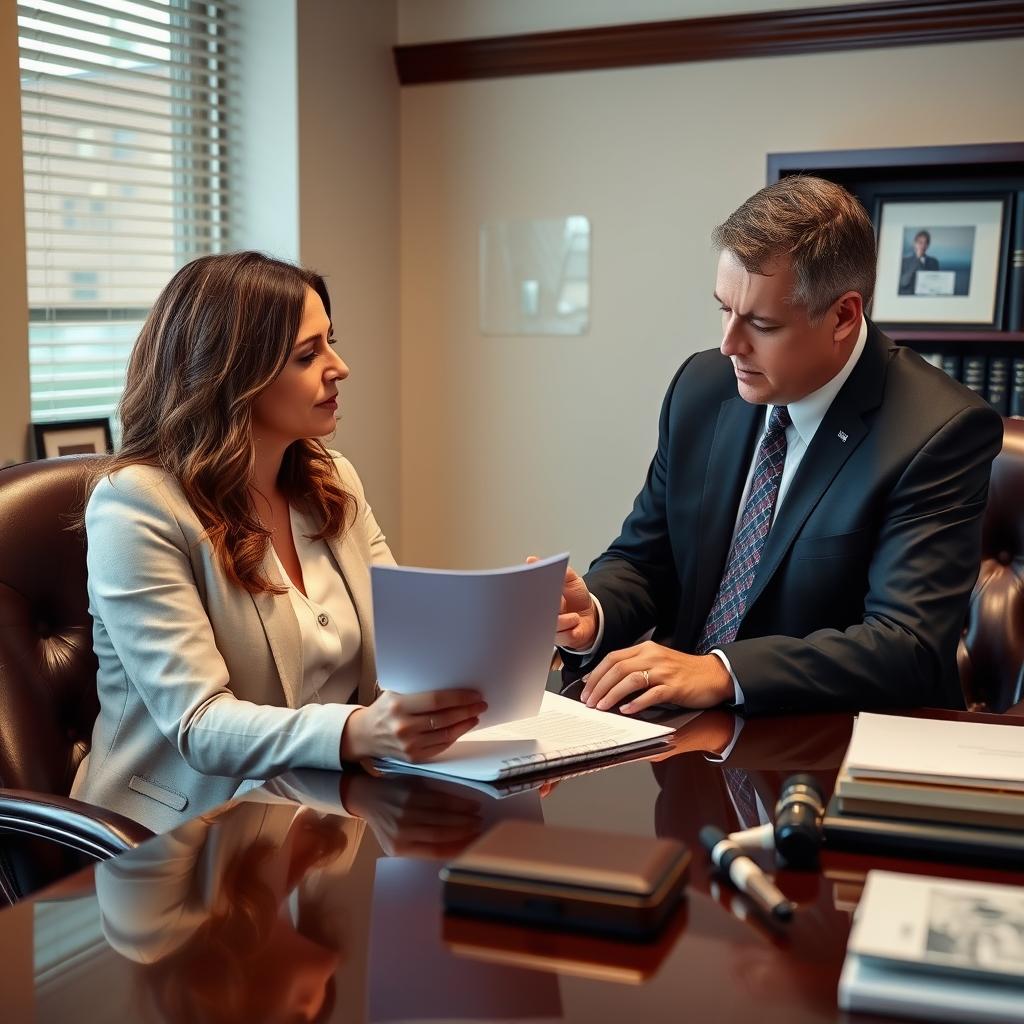
Partner Support Lawyer Chesterfield County, VA
When a marriage or partnership ends, financial support between spouses—referred to in Virginia law as spousal support—can become a central issue. Whether you are the party who may receive support or the one who may be asked to pay, understanding how Virginia courts evaluate partner support is essential. The process involves statutory factors, judicial discretion, and specific procedures that unfold in Chesterfield County’s courts. Mr. Sris, Owner and Founder of Law Offices Of SRIS, P.C., concentrates his practice on family law matters, including partner support disputes. Mr. Sris and the firm’s Of Counsel attorneys work to achieve outcomes that reflect each client’s financial circumstances and the statutory framework that governs here. For a confidential consultation, contact the firm’s Richmond location at (888) 437-7747. Law Offices Of SRIS, P.C. – Advocacy Without Borders.
How Does Partner Support Work in Chesterfield County, Virginia?
Partner support, legally termed “spousal support” or “alimony,” is financial support paid by one spouse to the other during or after a divorce. In Virginia, courts analyze spousal support under Va. Code § 20-107.1, which lists 13 statutory factors. Judges have broad discretion to set the amount and duration of support based on the evidence presented. In Chesterfield County, spousal support cases are heard in the Chesterfield County Circuit Court if they are part of a divorce proceeding, or in the Chesterfield County Juvenile and Domestic Relations District Court when support is sought independently of a divorce. The court may award temporary support while a case is pending, or permanent support as part of a final decree. The goal is to balance the financial needs of the receiving spouse with the paying spouse’s ability to provide support, taking into account the standard of living established during the marriage.
To initiate a spousal support case in Chesterfield County, a party must file the appropriate pleading with the court. In a divorce, the complaint for divorce includes a request for spousal support. For support only, a petition is filed in the Juvenile and Domestic Relations District Court. The court may consider motions for pendente lite support, which provides temporary relief while the case proceeds. Evidence at a support hearing typically includes financial records, tax returns, pay stubs, and testimony about the parties’ contributions to the marriage. Mediation is available but not mandatory, and many cases resolve through a negotiated separation agreement that includes spousal support terms. If the court must decide, the statutory factors guide the outcome, and the judge’s order is enforceable through contempt proceedings if payments are not made.
Frequently Asked Questions
What is partner support in Virginia?
Partner support, known in Virginia as spousal support or alimony, is court-ordered financial assistance from one spouse to the other during or after divorce. It is governed by Va. Code § 20-107.1, which directs the court to consider factors such as the duration of the marriage, the standard of living, each spouse’s earning capacity, and the contributions of each spouse to the family’s well-being. Spousal support is not automatic; the requesting spouse must demonstrate a need and the other spouse’s ability to pay. An experienced family law attorney can help present the evidence required to support or challenge a claim for support.
How is spousal support calculated in Chesterfield County?
There is no fixed mathematical formula for spousal support in Virginia; the judge weighs the 13 factors listed in Va. Code § 20-107.1. These include the parties’ ages, health, incomes, the property they own, the contributions each made to the family, and decisions about careers or education made during the marriage. In Chesterfield County Circuit Court, a judge may also consider any allegations of fault, such as adultery or cruelty, which can affect the support award. The outcome is heavily fact-dependent, so presenting a clear financial picture and compelling testimony is crucial.
Can spousal support be modified after a divorce?
Yes, spousal support can be modified if there is a material change in circumstances, unless the parties agreed in a separation agreement that the support is non‑modifiable. A material change might include a job loss, a significant increase or decrease in income, retirement, or a change in health that affects earning ability. The party seeking modification must file a motion in the same court that issued the original order—in Chesterfield County, that is typically the Circuit Court. The court retains jurisdiction to modify support as long as the obligation continues, unless the support amount was set by a binding contract that prohibits modification.
What factors does the court consider when deciding spousal support?
The court weighs 13 statutory factors, including the earning capacity, age, health, and financial resources of each spouse, the standard of living established during the marriage, and the duration of the marriage. Additional factors include the contributions of each spouse to the family’s well-being, the property interests of each, and any decisions each spouse made regarding their own career or education that advantaged the other. In Chesterfield County, judges also consider any fault that contributed to the breakdown of the marriage. A thorough presentation of these factors is essential to achieving a fair outcome.
How long must spousal support be paid?
The duration of spousal support is determined by the court based on the circumstances of the parties. In some cases, support is awarded for a defined period—for example, a term of years to allow the receiving spouse to become self‑supporting through education or job training. In other cases, particularly long‑term marriages where one spouse cannot realistically re‑enter the workforce, support may be indefinite. The order itself will specify whether support terminates upon death, remarriage of the recipient, or cohabitation in a relationship analogous to marriage, as provided in Va. Code § 20-109.
What if my ex-spouse stops paying spousal support?
If a court‑ordered spousal support obligation is not paid, the recipient may seek enforcement through the court that issued the order. In Chesterfield County, this is often the Circuit Court. Enforcement remedies can include wage garnishment, a judgment for arrears, contempt of court, and even jail time for willful non‑payment. The court can also order the delinquent spouse to pay the recipient’s attorney fees. Prompt action is advisable, because the longer the non‑payment continues, the more difficult collection can become. An experienced family law attorney can guide you through the enforcement process.
Do I need a lawyer for a partner support case in Chesterfield County?
You are not required by law to have a lawyer, but spousal support cases involve complex financial issues and procedural rules that are difficult to navigate alone. A misstep in presenting evidence, failing to meet a deadline, or misunderstanding the statutory factors can affect the support award or your ability to modify it later. Mr. Sris and the firm’s Of Counsel attorneys routinely appear in Chesterfield County courts on spousal support matters, and they work to build a complete record that supports your position. To discuss your specific situation, contact Law Offices Of SRIS, P.C. at (888) 437-7747.
How do I file for spousal support if I am not yet divorced?
If you are still married but need financial support, you may file for separate maintenance in the Chesterfield County Juvenile and Domestic Relations District Court. This action asks the court to order support without dissolving the marriage. It is an option when divorce is not immediately available—for instance, if the six‑month residency requirement under Va. Code § 20-97 has not been met. The court applies the same spousal support factors. Once a divorce is filed, the support obligation is typically addressed in the divorce proceeding in the Circuit Court.
Can spousal support be terminated if the recipient remarries?
Under Virginia law, spousal support automatically terminates upon the remarriage of the recipient, unless the support order or a written agreement specifically provides otherwise. This rule, found in Va. Code § 20-109, also extends to cohabitation in a relationship analogous to marriage for one year or more. If the recipient remarries, the paying spouse can stop payments, but it is often wise to obtain a court order confirming the termination to avoid future disputes. The paying spouse may file a motion in the court that issued the support order.
What is the difference between spousal support and child support?
Spousal support is financial assistance to a former spouse; child support is for the benefit of a minor child. In Virginia, child support is calculated under statutory guidelines based on the parents’ combined gross income and the number of children (Va. Code § 20-108.1). Spousal support, by contrast, has no guideline formula and is based on the 13 factors and judicial discretion. The two obligations are separate: a parent may pay both child support and spousal support, and the amounts are determined independently. Both can be enforced through the court.
How does the court enforce a spousal support order?
A spousal support order is enforceable through a rule to show cause, which requires the paying spouse to appear and explain why they should not be held in contempt. If the court finds contempt, it may impose fines, award a money judgment for arrears, order wage withholding, or even incarcerate the obligor. In Chesterfield County, enforcement proceedings are heard in the court that entered the support order. The recipient may also seek to recover attorney fees incurred in the enforcement action. Prompt legal action often results in a quicker resolution.
What should I bring to a consultation about partner support?
For a productive consultation, bring financial documents including tax returns, pay stubs, bank statements, retirement account statements, and any existing separation or property settlement agreements. A list of your monthly expenses and debts is helpful, as is information about your spouse’s income if known. If a court case is already pending, bring copies of all pleadings and court orders. This information allows the attorney to assess the likely support range and your legal options. To schedule a confidential consultation, reach Law Offices Of SRIS, P.C. at (888) 437-7747.
About Mr. Sris and the Firm’s Of Counsel Attorneys
Mr. Sris, Owner and Founder of Law Offices Of SRIS, P.C., is a former prosecutor who has concentrated his practice in family law matters for many years. He is admitted in Virginia, Maryland, the District of Columbia, New Jersey, and New York. Mr. Sris testified before the Virginia House Courts of Justice Committee in support of 2019 HB 635 (chief patron Del. David Bulova). The firm’s Of Counsel attorneys bring additional experience in family law, and together they work to present well‑prepared cases in Chesterfield County courts. Results may vary. To request a consultation, call (888) 437-7747.
Learn more about Family Law in Henrico County, Hanover County Family Law, or Fairfax County Family Law. Our Richmond location serves clients throughout central Virginia.
For authoritative primary sources, see Virginia Code Title 20 (Domestic Relations), the Chesterfield County Circuit Court website, and the Chesterfield County Juvenile and Domestic Relations District Court.
Attorney advertising. Prior results do not guarantee a similar outcome. Results may vary.
Case results depend on a variety of factors unique to each case.