
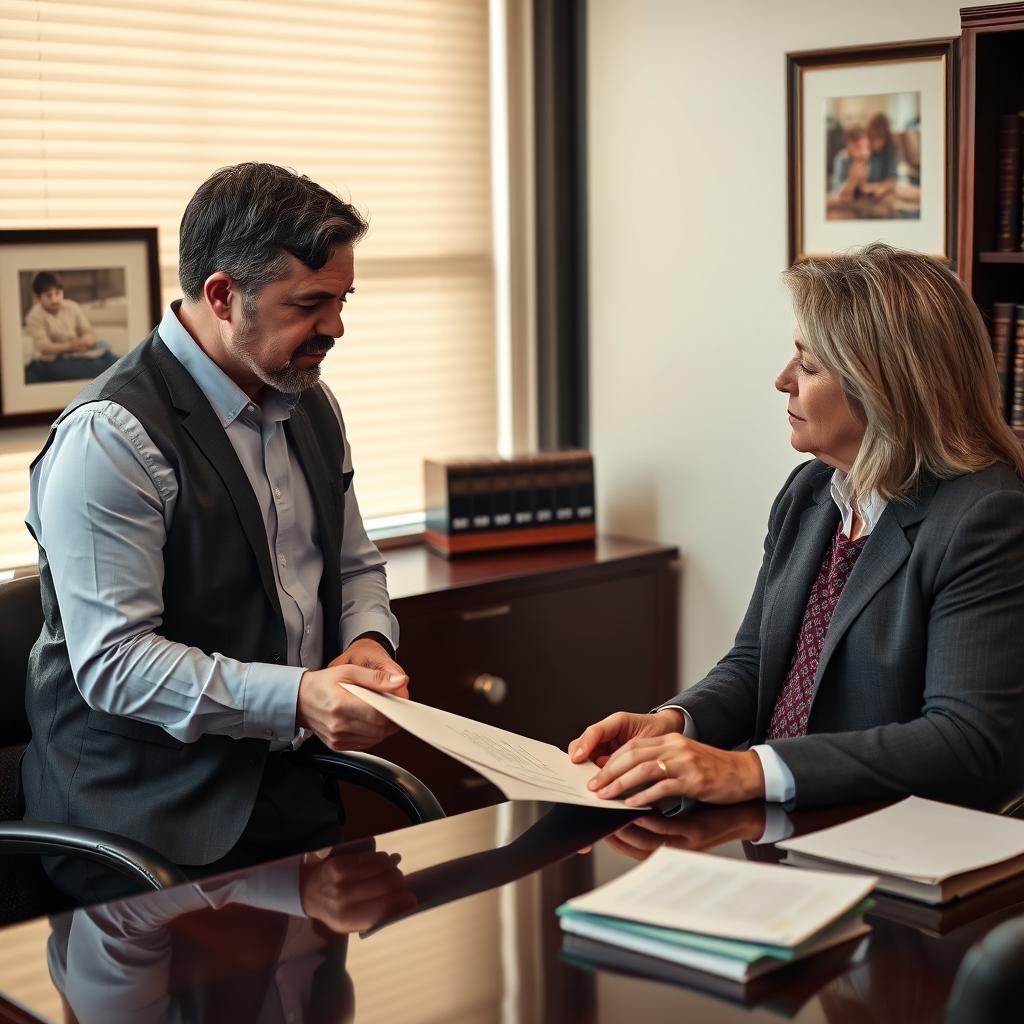
Paternity Lawyer Prince George County, VA
You just learned that you may be a father — or perhaps the mother of your child is denying your parental rights. You are not alone. A paternity action in Prince George County, Virginia can feel overwhelming, but it does not have to be. Mr. Sris and his Of Counsel team at Law Offices Of SRIS, P.C. help mothers, fathers, and children resolve paternity matters with clarity and purpose. Whether you need to establish legal parentage to secure custody and visitation, challenge a paternity claim you believe is incorrect, or ensure your child receives the support they deserve, we are prepared to guide you. Call (888) 437-7747 to schedule a consultation at our Richmond location, which regularly serves Prince George County families. Law Offices Of SRIS, P.C. – Advocacy Without Borders.
Strategy Options for Paternity in Prince George County
Paternity is the legal acknowledgment of a father-child relationship. In Virginia, establishing paternity unlocks rights to custody, visitation, and inheritance, while also creating a duty to provide financial support. The strategy you choose depends on whether the parents agree, whether the child was born during a marriage, and what outcome you seek.
When both parents agree on the father’s identity, the simplest route is a voluntary acknowledgment of paternity, signed at the hospital after birth or later through the Virginia Department of Social Services. This creates a legal finding of paternity without a court hearing. If there is disagreement, either parent may petition the Prince George County Juvenile and Domestic Relations District Court to order genetic testing. The court can direct DNA testing, and results that demonstrate a 98% or higher probability of paternity create a legal presumption that the tested man is the father. If the child’s parents are married, paternity is presumed in the husband under Virginia law, but that presumption can be rebutted in court with clear and convincing evidence.
Mr. Sris and his Of Counsel evaluate each family’s circumstances — whether the goal is to secure a father’s right to time with his child, to obtain child support, or to prove that a man is not the biological father — and then develop a plan aligned with Prince George County court procedures.
What to Expect in Prince George County Paternity Court Proceedings
The paternity process in Prince George County typically begins with the filing of a petition in the Prince George County Juvenile and Domestic Relations District Court, located at 6601 Courts Drive, Prince George, VA 23875. This court handles standalone custody, visitation, and child support matters, including paternity establishment. If a divorce is already pending, the paternity question may instead be resolved in the Prince George County Circuit Court, which has exclusive jurisdiction over divorce and equitable distribution.
After the petition is filed, the court schedules an initial hearing. If genetic testing is necessary, the court will order the mother, child, and alleged father to submit to a DNA test. Once paternity is established — either through acknowledgment, testing, or a court finding — the judge will address any related requests for custody, visitation, or child support. Virginia courts decide custody based on the best interests of the child, considering factors such as each parent’s relationship with the child, ability to provide care, and any history of abuse. Child support is calculated using statutory guidelines tied to the parents’ combined gross incomes. Throughout this process, having an attorney who understands Prince George County’s local practices helps you present your position effectively and avoid procedural missteps.
Virginia Paternity Laws and Their Implications
Virginia paternity law is governed primarily by Virginia Code § 20‑49.1 et seq. The statute outlines who may bring a paternity action — the mother, the putative father, the child’s guardian, or the Virginia Department of Social Services — and sets forth the procedural pathway. Once paternity is legally established, a father gains the right to seek custody and visitation, and the child gains the right to financial support, inheritance through intestate succession, and access to medical history information from both parents.
For an unmarried father, establishing paternity is the critical first step before he can assert any custodial or visitation rights. Without a legal finding of paternity, he has no standing to petition for custody or parenting time. For a mother, establishing paternity may be necessary to obtain a child support order. For a man who has been wrongly named as the father, challenging paternity through a court proceeding can relieve him of ongoing support obligations that would otherwise accrue. The stakes are high, and the statutory framework requires careful navigation. For a full breakdown of Virginia family law statutes, see our comprehensive statutory analysis on srislawyer.com.
About Mr. Sris and His Of Counsel Team
Mr. Sris, Owner and Founder of Law Offices Of SRIS, P.C., is a former prosecutor who has practiced family law in Virginia since 1997. He is admitted in Virginia, Maryland, the District of Columbia, New Jersey, and New York. Mr. Sris testified before the Virginia House Courts of Justice Committee in support of 2019 HB 635 (chief patron Del. David Bulova). His courtroom insight, combined with the support of seasoned Of Counsel attorneys, provides clients with practical, experience‑based guidance in paternity and other family law matters.
Our firm’s Richmond location — 7400 Beaufont Springs Drive, Suite 300, Room 395, Richmond, VA 23225 — is available by appointment to serve families throughout Prince George County, including the Prince George and Hopewell areas. We maintain a consistent presence in the courts at 6601 Courts Drive and understand the expectations of the Eleventh Judicial District bench. Call (888) 437‑7747 to request a consultation.
Frequently Asked Questions
Do I need a lawyer for a paternity matter in Prince George County?
You are not legally required to have a lawyer to establish or challenge paternity in Virginia, but legal guidance can help protect your parental rights and secure the outcome you need. Paternity decisions have lasting effects on custody, support, and inheritance. An experienced attorney can ensure genetic testing is properly ordered, deadlines are met, and your interests are presented clearly to the Prince George County Juvenile and Domestic Relations District Court.
How is paternity established in Prince George County if the father denies he is the parent?
If a man denies paternity, the mother or state agency can petition the Prince George County Juvenile and Domestic Relations District Court for genetic testing. The court will order DNA tests for the mother, child, and alleged father. If the test results show a probability of paternity of 98% or higher, Virginia law presumes the man is the father. He then has the opportunity to contest the finding, but must present clear and convincing evidence to overcome the presumption.
What rights does a father gain after paternity is established in Virginia?
Once paternity is legally established, an unmarried father gains the same rights as any parent — including the right to seek custody, visitation, and participation in major decisions affecting the child. He also assumes the duty to provide financial support. The child likewise gains the right to inherit from the father and to access family medical history. These rights and obligations are enforced by the Prince George County Circuit Court if they arise within a divorce, or by the Juvenile and Domestic Relations District Court in standalone cases.
Can a paternity finding be challenged after it has already been entered?
Yes, under certain circumstances a paternity determination can be set aside, but Virginia law imposes strict time limits and evidentiary standards for doing so. A voluntary acknowledgment of paternity may be rescinded within 60 days of signing, or later if fraud, duress, or material mistake is proven in court. A court order of paternity may be challenged through an appeal or a motion to vacate under limited grounds. Because the rules are technical, anyone considering a challenge should seek advice promptly.
What if the mother and father live in different states, but the child resides in Prince George County?
Virginia courts have jurisdiction over paternity and child support when the child lives in Virginia, even if one or both parents reside elsewhere. The Prince George County Juvenile and Domestic Relations District Court can adjudicate paternity and issue support orders based on the child’s residence. For custody matters, the Uniform Child Custody Jurisdiction and Enforcement Act (UCCJEA) determines whether Virginia or another state is the appropriate forum. Our multi-state practice allows us to coordinate with counsel in other jurisdictions when needed.
How much does a paternity lawyer cost in Prince George County?
Attorney fees for a paternity case vary based on the complexity of the matter, whether DNA testing is needed, and the amount of court time involved. At Law Offices Of SRIS, P.C., we offer consultations by appointment so we can assess your situation and discuss the fee structure that applies. Call (888) 437-7747 to ask about scheduling a consultation and learn more about what you can expect.
For guidance on your specific situation, reach Law Offices Of SRIS, P.C. at (888) 437-7747. Our Richmond location serves Prince George County and the surrounding communities. By appointment only.
Attorney advertising. Prior results do not guarantee a similar outcome. Results may vary.
Law Offices Of SRIS, P.C. — Richmond Location
7400 Beaufont Springs Drive, Suite 300, Room 395, Richmond, VA 23225
(888) 437-7747 | By appointment only.
Case results depend on a variety of factors unique to each case.