
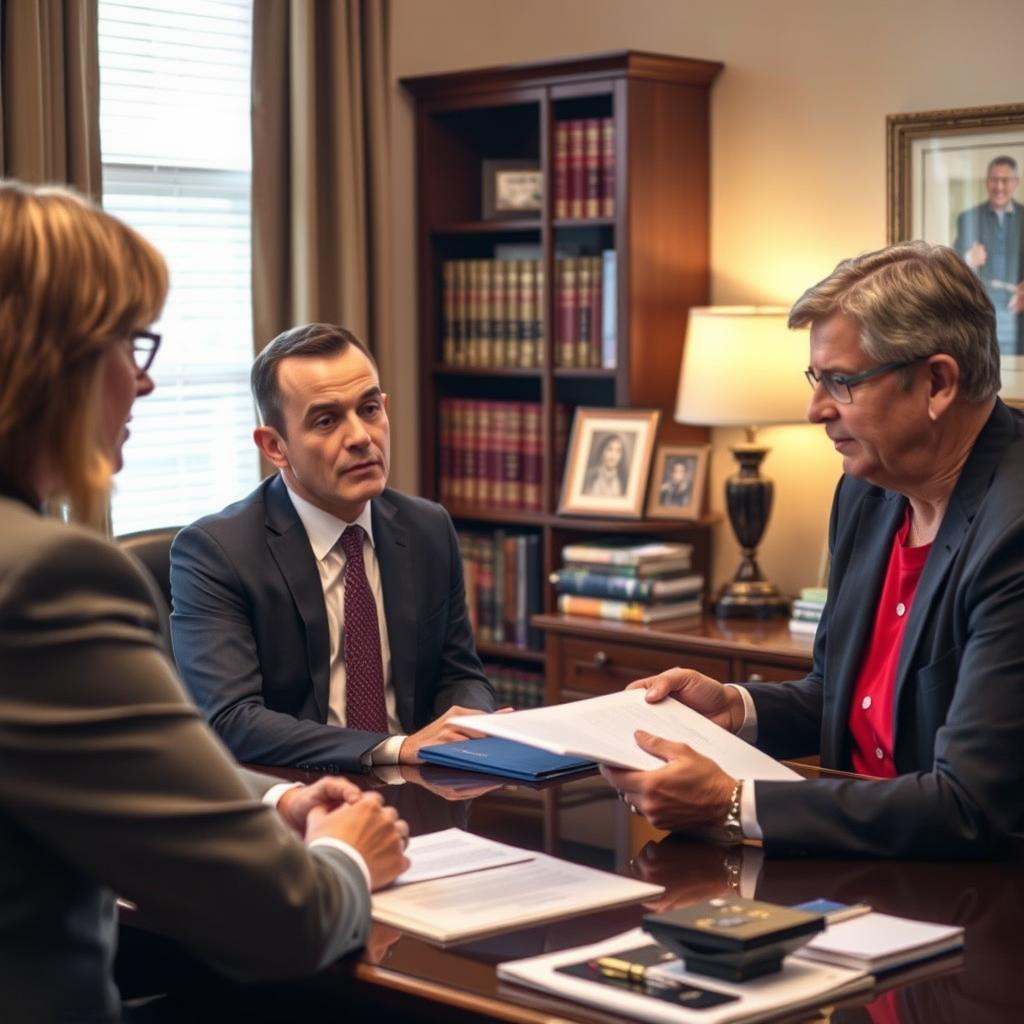
Postnuptial Agreement Lawyer King William County, VA
After the wedding, life settles into a routine—but sometimes the financial landscape shifts. A couple in King William County may have signed a prenuptial agreement, or they may not have. When new assets, business interests, or inheritance expectations surface, a postnuptial agreement becomes a practical step to clarify property rights and avoid future conflict. Mr. Sris and the firm’s Of Counsel attorneys work with spouses to draft enforceable agreements that reflect the reality of their marriage. For a confidential conversation, reach Law Offices Of SRIS, P.C. at (888) 437-7747. Law Offices Of SRIS, P.C. – Advocacy Without Borders.
How Mr. Sris and the Firm’s Of Counsel Attorneys Approach Postnuptial Agreements
A postnuptial agreement in Virginia is governed by the Premarital Agreement Act, Va. Code § 20-147 et seq., which applies equally to agreements signed after marriage. The firm’s approach emphasizes voluntary disclosure, independent representation where needed, and careful drafting to withstand judicial scrutiny. Mr. Sris and the firm’s Of Counsel attorneys begin by understanding the couple’s goals—whether they seek to protect a family business, define separate property, or set terms for spousal support in the event of a divorce. The process involves gathering financial information, negotiating terms, and ensuring the final document forms no part of coercion or duress. Because Virginia is an equitable distribution state, a valid postnuptial agreement can significantly shape how a court divides property later, and a poorly drafted one may be set aside.
Unlike a separation agreement, which a couple executes when they are already preparing to divorce, a postnuptial agreement is a planning tool. Mr. Sris and the firm’s Of Counsel attorneys have experience drafting these instruments for clients across King William County, including in West Point and Aylett. They understand the local courts—King William County Circuit Court handles divorce and equitable distribution, while the Juvenile and Domestic Relations District Court manages custody and support—and they structure agreements to hold up under the scrutiny of those forums. For a full statutory breakdown, see our comprehensive analysis on the main site.
What to Expect When Negotiating a Postnuptial Agreement
The typical process moves through several stages. First, each spouse consults with a lawyer to understand their rights and obligations. Then, the parties exchange financial disclosures sufficient to allow each to waive further disclosure if they choose. The attorneys draft the agreement, circulate it for review, and negotiate any disputed terms. Once both spouses are satisfied, they execute the agreement before a notary. In Virginia, a postnuptial agreement does not require court approval unless it is incorporated into a later divorce decree. Mr. Sris and the firm’s Of Counsel attorneys handle every stage, ensuring the agreement addresses property classification, debts, spousal support, and any other issues the couple wants to resolve.
Why a Carefully Drafted Agreement Matters
Virginia courts give significant weight to properly executed premarital and postnuptial agreements. However, they will not enforce an agreement that is unconscionable, the product of fraud, or entered into involuntarily. A postnuptial agreement that fails to meet statutory formalities can leave a spouse unprotected—marital property will then be divided according to Virginia’s equitable distribution factors under Va. Code § 20-107.3, and spousal support will be determined by the court. By working with an experienced attorney who concentrates in family law matters, a spouse can avoid a contested hearing over property division. The firm’s approach focuses on producing agreements that are clear, reciprocal, and reflective of the marriage’s economic realities. As always, results vary depending on the specific facts of each case; prior outcomes do not guarantee a similar result.
About Mr. Sris and the Firm’s Of Counsel Attorneys
Mr. Sris, Owner and Founder of Law Offices Of SRIS, P.C., has practiced since 1997. He is a former prosecutor and has testified before the Virginia House Courts of Justice Committee in support of 2019 HB 635 (chief patron Del. David Bulova). His background informs the meticulous drafting and negotiation of marital agreements. The firm’s Of Counsel attorneys bring extensive collective experience in family law, enabling the firm to handle postnuptial agreements for clients with significant assets, business interests, or complex financial histories. The firm’s Richmond location serves King William County, and consultations are available by appointment. Reach our location at (888) 437-7747.
Frequently Asked Questions
Can a postnuptial agreement be challenged in King William County?
Yes, a postnuptial agreement can be challenged in Virginia on grounds such as lack of voluntary consent, fraud, unconscionability, or failure to disclose assets. If a spouse files a divorce complaint in King William County Circuit Court and the validity of the postnuptial agreement is at issue, the court will assess these factors under the Premarital Agreement Act. An experienced attorney can help ensure the agreement is drafted to minimize the risk of a successful challenge.
Does Virginia law require both spouses to have their own lawyer for a postnuptial agreement?
Virginia law does not mandate separate legal representation for each spouse, but it strongly encourages it. If one spouse goes without independent counsel, a court may later scrutinize the agreement more closely for voluntariness and fairness. At Law Offices Of SRIS, P.C., we recommend each party consult with a separate attorney, and we can help facilitate that process while representing one spouse.
What property can a postnuptial agreement cover in Virginia?
A postnuptial agreement can address the classification and division of all marital and separate property, including real estate, retirement accounts, business interests, and even spousal support. However, it cannot determine child custody or child support, which are always subject to court review based on the child’s best interests. The agreement can define what is separate property and what is marital, potentially overriding Virginia’s default equitable distribution rules.
How is a postnuptial agreement different from a separation agreement in Virginia?
A postnuptial agreement is signed during an ongoing, intact marriage, while a separation agreement is executed when spouses are living apart and no longer cohabiting. A separation agreement is typically a precursor to divorce, resolving property, support, and custody. A postnuptial agreement is a planning tool and may never lead to divorce. Both are governed by contract principles and Virginia family law.
Do I need a lawyer if my spouse and I already agree on the terms?
Even when spouses agree, legal counsel can help ensure the agreement is properly structured and enforceable. An attorney will verify that all required financial disclosures are made, confirm the agreement conforms to Virginia statutory requirements, and draft language that leaves no ambiguity. A poorly worded DIY agreement can be invalidated, experienced to costly litigation later.
What happens if we don’t have a postnuptial agreement and later divorce?
Absent a postnuptial agreement, a Virginia court will classify and divide property according to equitable distribution under Va. Code § 20-107.3. The court will determine what is marital and separate, then divide marital property fairly—but not necessarily equally—based on 11 statutory factors. A postnuptial agreement allows a couple to decide these outcomes in advance rather than leaving them to a judge.
Can a postnuptial agreement be modified after it is signed?
Yes, a postnuptial agreement can be modified or revoked by a subsequent written agreement signed by both spouses. The modification must follow the same formalities as the original agreement. Common reasons for modification include a significant change in financial circumstances, such as the sale of a business or an inheritance.
Will King William County Circuit Court automatically enforce a postnuptial agreement?
No, the court will not automatically enforce a postnuptial agreement if its validity is questioned. If one spouse challenges the agreement, the court will hold a hearing to determine whether the agreement meets Virginia’s requirements. The party seeking enforcement must demonstrate that the agreement was executed voluntarily, with adequate financial disclosure, and without unconscionability.
How long does it take to draft a postnuptial agreement?
The timeline depends on the complexity of the couple’s assets and the level of agreement between spouses. Simple agreements can often be drafted and signed within a few weeks. More complex matters, involving business valuations, real estate appraisals, or negotiations over spousal support terms, may take longer. Mr. Sris and the firm’s Of Counsel attorneys work efficiently to complete the process without unnecessary delay.
Can a postnuptial agreement address what happens to our home in King William County?
Yes, a postnuptial agreement can specify how the marital home will be titled, divided, or sold in the event of divorce or death. Many couples use the agreement to clarify that one spouse retains the home while the other receives a buyout or other assets. Because real estate in King William County may have unique considerations—such as acreage, farm status, or historic value—it is important to address the property precisely in the agreement.
For guidance on your specific situation, reach Law Offices Of SRIS, P.C. at (888) 437-7747.
Contact a Postnuptial Agreement Lawyer in King William County
If you are considering a postnuptial agreement, it is wise to speak with an attorney who understands both the couple’s dynamics and Virginia’s statutory framework. Mr. Sris and the firm’s Of Counsel attorneys offer confidential consultations. You can reach the firm by phone at (888) 437-7747 or visit the Richmond location by appointment at 7400 Beaufont Springs Drive, Suite 300, Room 395, Richmond, VA 23225. The firm also maintains locations in Virginia, Maryland, the District of Columbia, New Jersey, and New York.
Attorney advertising. Prior results do not guarantee a similar outcome. Results may vary.
Case results depend on a variety of factors unique to each case.