
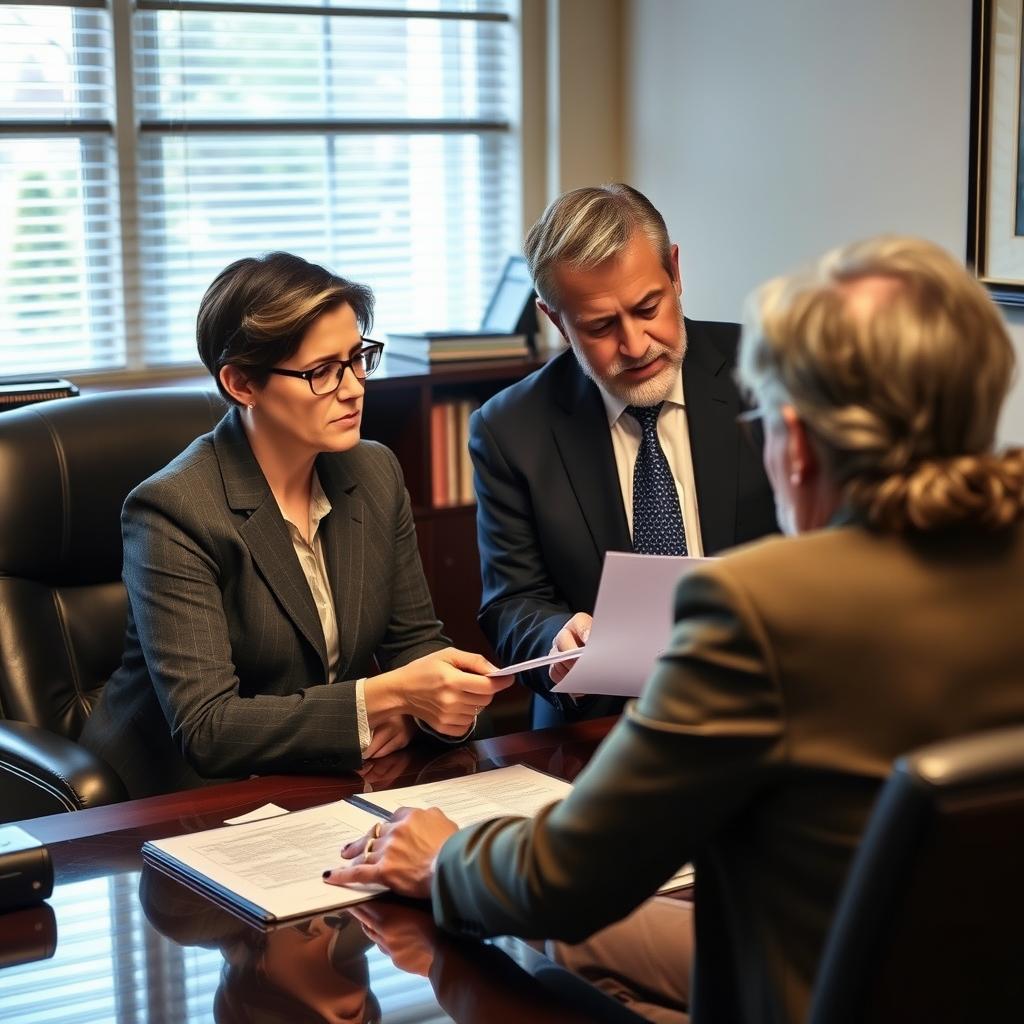
Rehabilitative Alimony Lawyer Goochland County, VA
Rehabilitative alimony is a form of spousal support designed to help a financially dependent spouse gain the education, training, or work experience needed to become self‑supporting after a divorce. In Goochland County, Virginia, rehabilitative alimony determinations are part of the broader divorce process and are decided in the Goochland County Circuit Court, located at 2938 River Road West, Bldg G, Goochland, VA 23063. Virginia courts apply the statutory factors set out in Va. Code § 20‑107.1 to decide whether rehabilitative support is appropriate, for how long, and in what amount. Mr. Sris and the firm’s Of Counsel attorneys represent individuals throughout Goochland County and the surrounding communities—Goochland, Crozier, and Oilville—in matters involving rehabilitative alimony, whether negotiating a settlement or presenting the case at a hearing. To discuss your situation and learn how the firm can assist, call (888) 437‑7747. Law Offices Of SRIS, P.C. – Advocacy Without Borders.
What Rehabilitative Alimony Means in Goochland County
In Virginia, spousal support is not automatic. When one spouse lacks the present ability to support themselves, a court may award rehabilitative alimony for a defined period, with the goal of allowing that spouse to obtain the skills necessary to become economically independent. Unlike permanent or indefinite support—which is reserved for cases where a spouse cannot reasonably be expected to become self‑sufficient—rehabilitative alimony is forward‑looking and time‑limited.
In Goochland County, family law matters are heard in two courts. The Goochland County Circuit Court handles divorce, equitable distribution of property, and spousal support—including rehabilitative alimony—as part of the overall dissolution of the marriage. The Goochland County Juvenile and Domestic Relations District Court addresses standalone custody, visitation, and child support issues, as well as protective orders. Because rehabilitative alimony decisions are intertwined with property division and often child custody. India is not a signatory to the 1980 Hague Convention on Civil Aspects of International Child Abduction. They are almost always litigated in the Circuit Court. The court’s case‑specific inquiry examines factors such as the length of the marriage, the standard of living established during the marriage, each spouse’s age and physical condition, the earning capacity and educational background of the recipient spouse, and the time and expense required to obtain the training or education needed to re‑enter the workforce. The court also considers any contributions one spouse made to the other’s career advancement and the extent to which one spouse’s absence from the job market has affected their current earning ability.
The Goochland County Circuit Court evaluates each marital situation individually. No formula prescribes a set duration or monthly amount; instead, the judge weighs the statutory factors against the evidence presented. A well‑supported request for rehabilitative support typically includes a detailed plan showing the steps the requesting spouse intends to take—such as enrollment in a degree or certificate program—and a realistic timeline for completion. Conversely, a spouse opposing a rehabilitative award may present evidence that the other spouse is capable of self‑support without additional training, or that the requested training is not reasonably likely to lead to employment at a level sufficient to alter the support calculus. The court’s ultimate order will specify the monthly payment amount and the duration of the award, which may be extended for good cause in limited circumstances.
For individuals in Goochland County, working with experienced counsel who understand the local court’s practices can be important. Mr. Sris and the firm’s Of Counsel attorneys are familiar with the procedures and expectations of the Goochland County Circuit Court. They help clients build a record that supports the requested rehabilitative alimony—or, for the opposing party, demonstrates why such an award is not warranted under the facts.
How Mr. Sris and the Firm’s Of Counsel Attorneys Handle Rehabilitative Alimony Cases
Rehabilitative alimony disputes often arise at a time when both spouses are under significant emotional and financial pressure. The firm’s approach is to focus the case on the factors the court will actually consider under Va. Code § 20‑107.1, rather than on collateral arguments that add expense without moving the matter forward. Early in the representation, counsel works with the client to identify the economic realities of the marriage and the realistic prospects for the requesting spouse’s future employment. For a spouse seeking rehabilitative support, that means developing a concrete vocational plan—identifying a specific program, its cost, and its likely effect on earning capacity. For a spouse opposing the claim, it means gathering evidence of the other spouse’s present ability to earn, including past work history and current job qualifications.
Before reaching court, the firm explores whether the parties can resolve the rehabilitative alimony question through negotiation or mediation. In many cases, a comprehensive separation agreement—resolving property division, child custody, and support—can include a rehabilitative alimony component that both sides find acceptable, avoiding the time and expense of a trial. Mr. Sris and the firm’s Of Counsel attorneys have experience structuring such agreements so that the terms are clear and enforceable. When a negotiated resolution is not possible, the firm prepares the case for a hearing in the Goochland County Circuit Court. That preparation can include retaining vocational attorneys to evaluate employability, presenting financial documentation to establish the marital standard of living, and eliciting testimony that addresses each statutory factor. The court’s decision is discretionary, but a thorough presentation grounded in the statute’s criteria gives the client the trusted opportunity for a favorable outcome. Results may vary.
About Mr. Sris and the Firm’s Of Counsel Attorneys
Mr. Sris is the Owner and Founder of Law Offices Of SRIS, P.C.; he has practiced law since 1997 and is admitted in Virginia, Maryland, the District of Columbia, New Jersey, and New York. As a former prosecutor, he brings courtroom experience to every family law matter he handles. Mr. Sris testified before the Virginia House Courts of Justice Committee in support of 2019 HB 635 (chief patron Del. David Bulova), a bill that revised the statutory framework for dividing retirement assets in Virginia divorces—an area of law closely related to spousal support and financial planning.
The firm’s Of Counsel attorneys bring additional depth to rehabiitative alimony and family law cases. Collectively, Mr. Sris and the firm’s Of Counsel attorneys offer extensive combined legal experience across multiple practice areas. They appear regularly in Virginia courts, including the Goochland County Circuit Court, and work to achieve resolutions that are fair and durable for clients in Goochland, Crozier, Oilville, and throughout the Richmond region. When you contact the firm, your initial consultation will be with Mr. Sris, who will discuss your situation and explain the legal options available to you.
Frequently Asked Questions
What is rehabilitative alimony in Virginia?
Rehabilitative alimony is a time‑limited form of spousal support designed to help a dependent spouse obtain the education or training needed to become self‑supporting after a divorce. Virginia courts award it under Va. Code § 20‑107.1 after evaluating the recipient spouse’s need, the other spouse’s ability to pay, and a series of statutory factors. The goal is to provide financial assistance while the recipient acquires marketable skills, not to create permanent support. The duration is tied to a specific, realistic vocational plan.
How does a Goochland County court decide the amount and length of rehabilitative alimony?
The Goochland County Circuit Court determines the amount and duration of rehabilitative alimony by weighing the factors listed in Va. Code § 20‑107.1, with particular attention to the recipient spouse’s educational needs, the time required for training, and the standard of living during the marriage. There is no preset formula. The court considers evidence such as a proposed educational plan, cost estimates, and the expected increase in earning capacity. The award may be modified if circumstances change, but the initial order is based on the facts as they exist at the time of the hearing.
Can rehabilitative alimony be modified or extended later?
Rehabilitative alimony may be modified upon a showing of a material change in circumstances, and in limited cases it may be extended for good cause if the recipient has not become self‑sufficient through no fault of their own. A request for extension must be made before the original award expires. The court will re‑examine the recipient’s efforts to comply with the vocational plan and whether additional time is reasonably necessary. For guidance on whether your situation qualifies for a modification, call (888) 437‑7747.
Do I need a lawyer for a rehabilitative alimony case in Goochland County?
While you are not legally required to hire an attorney, rehabiitative alimony involves complex statutory factors, financial documentation, and local court procedures that make experienced legal representation advisable. An attorney can help you present a persuasive vocational plan or, conversely, challenge the other party’s claimed need. Because the Goochland County Circuit Court’s decision is discretionary, having counsel who understands how the court applies the § 20‑107.1 factors can be critical to the outcome. Mr. Sris and the firm’s Of Counsel attorneys offer consultations to discuss your circumstances.
How do I start the process of requesting rehabilitative alimony in Goochland County?
The process begins by filing a complaint for divorce in the Goochland County Circuit Court and requesting spousal support as part of the divorce proceeding. A pendente lite motion for temporary support can be filed early in the case to address immediate needs while the divorce is pending. You will need to gather financial records, prepare a proposed vocational rehabilitation plan, and be ready to present evidence supporting each statutory factor. Mr. Sris and the firm’s Of Counsel attorneys can guide you through each step.
What if my spouse is self‑employed or has irregular income?
When a spouse is self‑employed or has variable income, determining their ability to pay rehabilitative alimony requires careful analysis of business records, tax returns, and cash flow statements to find income that may not appear on a simple pay stub. The Goochland County Circuit Court will look beyond the face value of a tax return and can impute income if the evidence shows a spouse is intentionally under‑employed or hiding income. A skilled attorney can help trace income through deposits, lifestyle analysis, and business‑expense review to present an accurate financial picture to the court.
Related Family Law Pages:
Fairfax County Family Law Lawyer |
Fairfax City Family Law Lawyer |
Prince William County Family Law Lawyer |
Manassas City Family Law Lawyer
Virginia Family Law Resources:
Va. Code § 20‑107.1 – Spousal Support Factors |
Goochland County Courts |
Virginia Code Title 20 – Domestic Relations
Attorney advertising. Prior results do not guarantee a similar outcome. Results may vary.
Case results depend on a variety of factors unique to each case.