
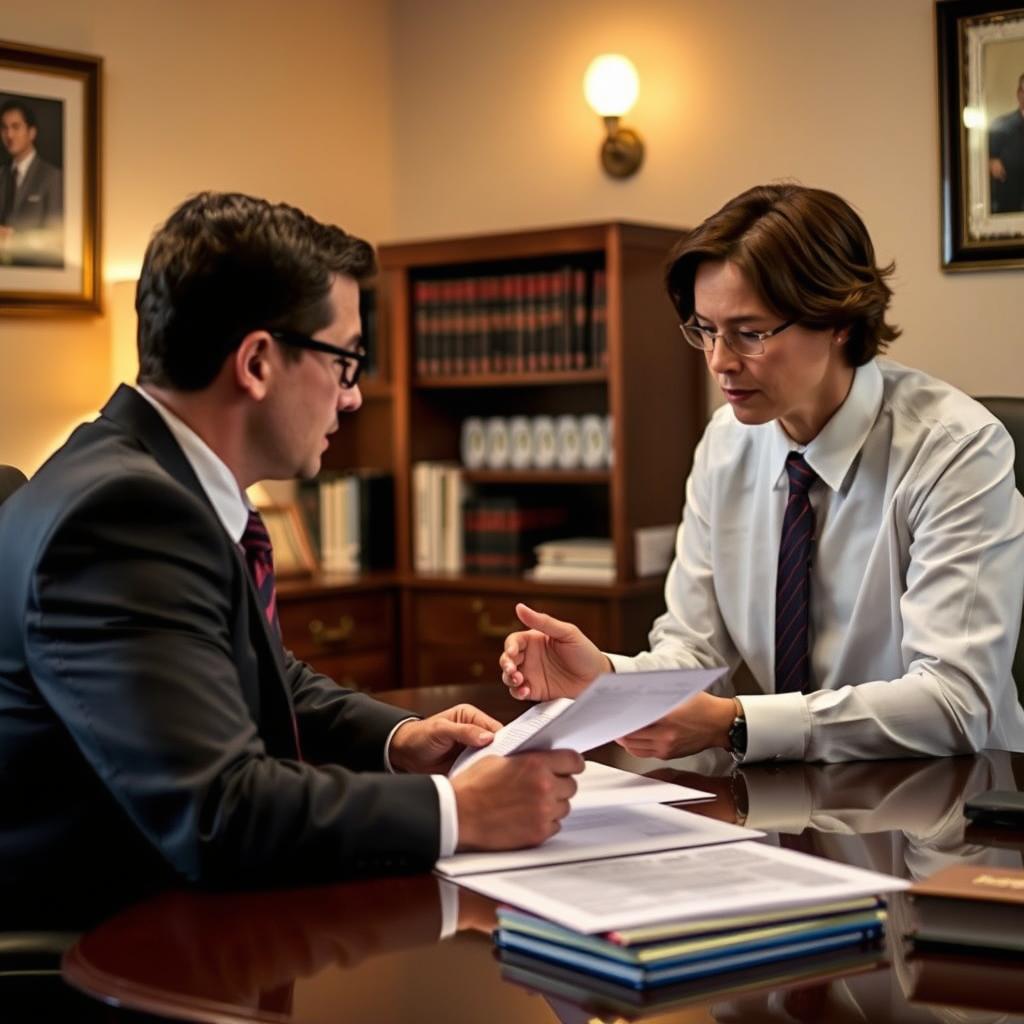
Third Party Custody Lawyer Dinwiddie County, VA
When a child’s parents are unable to provide a safe and stable home, Virginia law allows a non‑parent — a grandparent, aunt, uncle, or another adult with a legitimate interest — to petition a court for third‑party custody. These matters are heard in Dinwiddie County before the Dinwiddie County Juvenile & Domestic Relations District Court (when custody is not part of a divorce) or the Dinwiddie County Circuit Court (if a divorce or equitable distribution is involved). Both courts sit at the Dinwiddie Courthouse in Dinwiddie, Virginia. Mr. Sris, Owner and Founder of Law Offices Of SRIS, P.C., and his Of Counsel team concentrate part of their practice on helping third parties throughout Dinwiddie County—including the communities of Dinwiddie and McKenney—present a compelling case that custody with them serves the child’s best interests. Third‑party custody cases often arise because parents are absent, incarcerated, or struggling with substance abuse, and a relative steps forward to offer permanency. The legal standard is high, and the court will examine the fitness of the parents and the relationship between the child and the petitioner. If you are considering seeking third‑party custody or need to respond to a petition, contact Law Offices Of SRIS, P.C. at (888) 437‑7747 to schedule a consultation. Law Offices Of SRIS, P.C. – Advocacy Without Borders.
What Third Party Custody Means in Dinwiddie County
Third‑party custody is a legal arrangement in which an adult who is not the child’s biological or adoptive parent is awarded physical and legal custody. This can be a temporary or permanent order and is distinct from adoption. In Virginia, the governing statutes are found in Title 20 of the Virginia Code, particularly Va. Code § 20‑124.2, which sets the “best interests of the child” as the overarching standard, and § 20‑124.3, which lists the factors a court must weigh. Unlike child‑custody disputes between two parents, a third‑party petitioner must overcome the constitutional presumption that a fit parent acts in the child’s best interests. Therefore, a third‑party custody case requires clear and convincing evidence that the parent is unfit or that extraordinary circumstances exist.
In Dinwiddie County, family law matters are handled by the Dinwiddie County Juvenile & Domestic Relations District Court for standalone custody, visitation, and support petitions, while the Circuit Court addresses custody that is filed alongside a divorce action. The court will look closely at the child’s existing bonds with the petitioner, the parent’s current capacity to care for the child, and any history of abuse, neglect, or abandonment. Dinwiddie County lies within Virginia’s Eleventh Judicial District, and cases are heard at the Dinwiddie Courthouse. Our Richmond location regularly represents clients before these courts, and Mr. Sris and his Of Counsel are familiar with how local judges apply the trusted‑interest factors. Building a thorough third‑party custody case often means working with a guardian ad litem, collecting school and medical records, and presenting testimony about the stability the petitioner can offer. Because the evidentiary burden is heavy, early preparation and careful documentation are essential.
How Mr. Sris and His Of Counsel Handle Third Party Custody Cases
Mr. Sris, a former prosecutor who founded the firm in 1997, brings decades of courtroom experience to every family law matter. Together with his Of Counsel team, he approaches a third‑party custody petition as a carefully prepared legal proceeding—not a dispute to be settled casually. The process typically begins with a thorough consultation in which the attorney learns about the family dynamic, the reasons the parents cannot care for the child, and the relationship the petitioner maintains with the child. If the petitioner has been the child’s primary caretaker for an extended period, that fact will be documented and presented to the court under the trusted‑interest factors.
Once the petition is filed, the court will schedule an initial hearing. Depending on whether the case is in the J&DR Court or the Circuit Court, the procedural rules differ, but in either forum, Mr. Sris and his Of Counsel focus on marshaling evidence: testimony from teachers, counselors, and neighbors; reports from a guardian ad litem; and any records that show the child is thriving in the petitioner’s care. If the parents contest the petition, the matter may proceed to a trial where the court hears live testimony and reviews exhibits. At every stage, the firm works to present a clear and organized case, always with the goal of a result that protects the child’s welfare. Because every family situation is unique, the timeline depends on the court’s calendar and the issues in dispute. Throughout the case, clients are kept informed and are encouraged to ask questions about the process.
About Mr. Sris and His Of Counsel Team
Mr. Sris is the Owner and Founder of Law Offices Of SRIS, P.C. Admitted in Virginia, Maryland, the District of Columbia, New Jersey, and New York, he has practiced since 1997 and concentrates a significant part of his caseload on family law matters, including contested custody petitions. Mr. Sris testified before the Virginia House Courts of Justice Committee in support of 2019 HB 635 (chief patron Del. David Bulova), a bill that addressed retirement‑plan division in divorce—an area that sometimes intersects with complex custody and support issues. His background as a former prosecutor sharpens his ability to examine witnesses and present evidence persuasively in the courtroom.
Working alongside Mr. Sris is a team of Of Counsel attorneys who also focus their practice on family law. Operating from the firm’s Richmond location, they appear routinely in Dinwiddie County courts and understand the local procedures and expectations. Mr. Sris and his Of Counsel bring extensive combined legal experience in custody, visitation, and support matters. Results may vary. Whether a client is a grandparent who has raised a child since birth or an aunt seeking to intervene because of parental neglect, the team is prepared to advocate forcefully while staying sensitive to the emotional realities of family litigation.
Frequently Asked Questions
Who can file for third‑party custody in Virginia?
A person with a legitimate interest in the child—such as a grandparent, aunt, uncle, adult sibling, or another relative—may petition the court for third‑party custody in Virginia. The petitioner must demonstrate that the child’s parents are unfit or that extraordinary circumstances justify placing custody with a non‑parent. Legitimate interest is defined in Va. Code § 20‑124.1 and includes individuals who have a close, ongoing relationship with the child. The court will evaluate the existing parent‑child bond and the petitioner’s ability to provide a stable home. Petitions are heard in the Juvenile & Domestic Relations District Court or, if part of a divorce, in the Circuit Court. Because the burden of proof is high, anyone considering this step is encouraged to consult an experienced family law attorney early in the process.
What factors does the court consider when deciding a third‑party custody petition?
The court applies the trusted‑interest factors listed in Va. Code § 20‑124.3, which include the age and physical and mental condition of the child and each parent, the relationship between the child and each parent or other significant adult, the child’s needs, and any history of family abuse. In a third‑party petition, the court also weighs the parent’s fitness and whether extraordinary circumstances exist. It will examine the petitioner’s relationship with the child, the length of time the child has lived with the petitioner, and the stability of the proposed home. A guardian ad litem may be appointed to investigate and make a recommendation. Because these cases often involve complex family dynamics, presenting clear, well‑organized evidence is crucial to achieving a favorable outcome.
Do I need a lawyer for a third‑party custody case in Dinwiddie County?
While you are not legally required to have an attorney, third‑party custody cases involve a heavy evidentiary burden and strict procedural rules, making legal representation highly advisable. A lawyer can help you gather the necessary evidence, file the correct pleadings in the proper court—J&DR or Circuit—and prepare you for what to expect at each hearing. Dinwiddie County courts follow specific local practices, and failing to comply with procedural requirements can delay or derail a petition. Law Offices Of SRIS, P.C. offers consultations to discuss the facts of your situation and outline potential strategies. For guidance on your specific situation, reach Law Offices Of SRIS, P.C. at (888) 437‑7747.
How long does a third‑party custody case take in Virginia?
The timeline for a third‑party custody case depends on whether it is contested, the court’s docket, and the complexity of the evidence, but petitioners should be prepared for a process that can take several months. An uncontested case where all parties agree may resolve sooner, while a contested case requiring a trial and the involvement of a guardian ad litem will take longer. The Dinwiddie County Juvenile & Domestic Relations District Court and Circuit Court schedule hearings according to their own calendars. Working with an attorney can help ensure that filings are complete and deadlines are met, which may help the case move forward efficiently. To discuss the details of your matter, contact Law Offices Of SRIS, P.C. at (888) 437‑7747.
Can a non‑parent get custody if the parents are not necessarily unfit?
In limited situations, a non‑parent may be awarded custody even when a parent is not clearly unfit, but the bar is extremely high and requires proof of extraordinary circumstances that make the parental arrangement detrimental to the child. Courts give great weight to the parent‑child relationship, and the law presumes that a fit parent will act in the child’s best interests. However, if a child has been raised by a relative for years and has developed a primary psychological bond with that relative, a court might find that uprooting the child would cause serious harm. Every case turns on its facts, and the evidence must be particularly strong. For a consultation, reach Mr. Sris and his Of Counsel at (888) 437‑7747.
Additional family law resources in Virginia:
Fairfax County Family Law Attorney,
Prince William County Family Law Attorney,
Manassas Family Law Lawyer,
Falls Church Family Law Representation.
For official information, consult the Virginia Code Title 20 – Domestic Relations at Virginia Legislative Information System and the Dinwiddie County Combined Courts webpage at Virginia’s Judicial System.
Attorney advertising. Prior results do not guarantee a similar outcome. Results may vary.
Case results depend on a variety of factors unique to each case.